Shibui: The Japanese Aesthetic of Quiet, Understated Beauty
Shibui is a Japanese word that resists translation, because the nearest English options — understated, austere, subdued — each lose part of it.
The word originally describes a taste in the mouth. Applied to objects, it describes beauty that does not perform, and that tends to improve the longer you live with it.
This guide explains what shibui means, how it differs from wabi-sabi and iki, and how it appears in objects. As a Japanese craft workshop we make decisions about restraint routinely, so the section on objects reflects working practice.
What Does Shibui Mean in Japanese?
Shibui (渋い) is an adjective describing quiet, restrained, unshowy beauty. The corresponding noun is shibusa (渋さ).
The literal meaning is astringent — the puckering sensation of an unripe persimmon or strong green tea. Both senses remain live in modern Japanese, and context determines which is meant.
How it is used in ordinary speech
- Shibui iro — a muted, subdued colour
- Shibui kao — a sour or displeased expression, using the literal sense
- Of a person, often a compliment: dignified and understated, with a quality that has come with age or experience
- Of a young person’s taste, sometimes gently teasing — their preferences seem older than they are
Shibui is not the absence of beauty but a particular kind of it: beauty held back deliberately, rather than beauty that never arrived.
Where the Japanese Word Shibui Came From
The aesthetic sense grew out of the sensory one.
Muromachi and Momoyama roots
The taste for restraint was consolidated in tea practice, particularly the wabi-cha line associated with Murata Jukō, Takeno Jōō and Sen no Rikyū (1522–1591). Tea placed explicit value on the plain and the unassertive at a time when displays of imported luxury were the competing standard.
Edo-period popular culture
By the Edo period the word had broadened into general use for taste and style. Sumptuary laws restricting visible luxury among commoners pushed sophistication into subtler territory: muted colours, costly linings inside plain garments, quality that only the wearer knew about.
One caution about how this history is usually told: shibui, wabi and sabi are often presented as an ancient fixed system, but much of the tidy modern formulation comes from twentieth-century writing on Japanese art. The taste is old; the neat definitions are newer.
Shibui, Wabi-Sabi and Iki: How the Japanese Terms Differ
These three overlap and are regularly conflated in English. They are not synonyms.
| Term | Core idea | Typical context |
|---|---|---|
| Shibui | Restrained, understated, quietly deep | Objects, colour, personal style, bearing |
| Wabi-sabi | Beauty in imperfection, transience and age | Tea ceramics, weathered materials, gardens |
| Iki | Stylish, worldly, unlaboured | Edo townspeople’s dress and manner |
The practical differences
Shibui and wabi-sabi are close, but wabi-sabi points at imperfection and impermanence while shibui points at restraint and depth. A new, perfectly made object can be shibui; a cracked and repaired one sits more naturally with wabi-sabi.
Shibui and iki are further apart. Iki carries wit and a degree of social self-awareness; shibui is quieter and less concerned with being noticed.
The Qualities That Make Something Shibui in Japanese Aesthetics
Shibui resists a checklist, but several qualities recur.
- Simplicity containing complexity. The surface is plain; detail rewards attention.
- Muted colour with depth. Not greyed out, but pulled back from full saturation.
- Texture over ornament. Interest comes from material rather than applied decoration.
- Restraint that reads as confidence. Nothing added to reassure the viewer that effort was made.
- Improvement with time. A shibui object typically looks better after years than on the first day.
A useful question
Ask whether the object is working to be liked. If it is designed to impress on first sight, it is not shibui, whatever the palette.
This makes shibui difficult to design toward directly. Restraint applied as a style becomes its own kind of display, which is the usual failure mode when the aesthetic is copied.
Shibui in Japanese Objects and Craft
The principle becomes concrete in workshops.
Where it appears
- Tea ceramics — plain forms, subdued glazes, surfaces that change with use
- Indigo textiles — deep blues that fade and soften over years
- Ironware — dark and matte, weight and texture rather than decoration
- Wood — oiled rather than lacquered, so grain and ageing stay visible
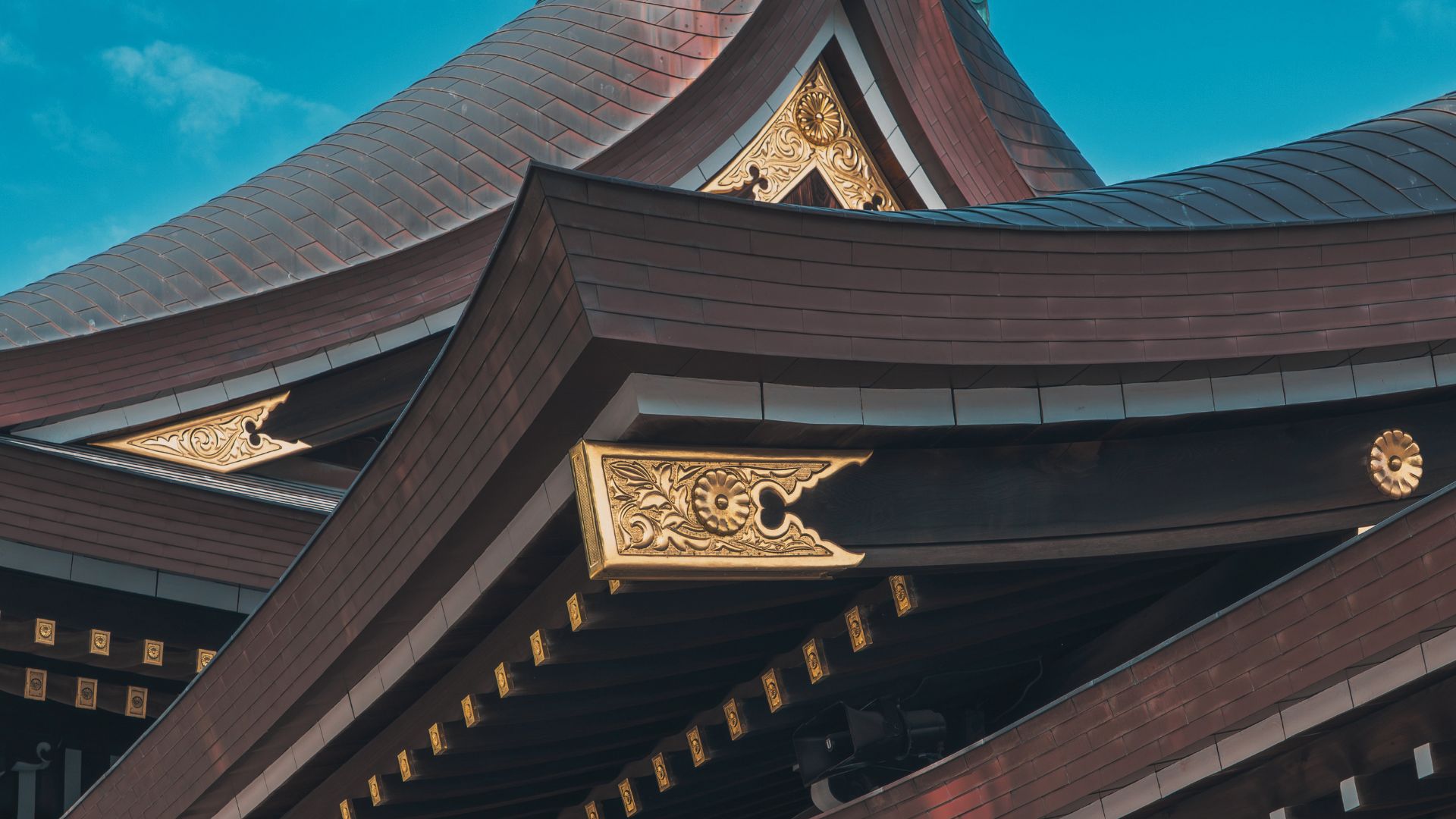
- Architecture — exposed structure, natural material, low light levels
A working example from enamel
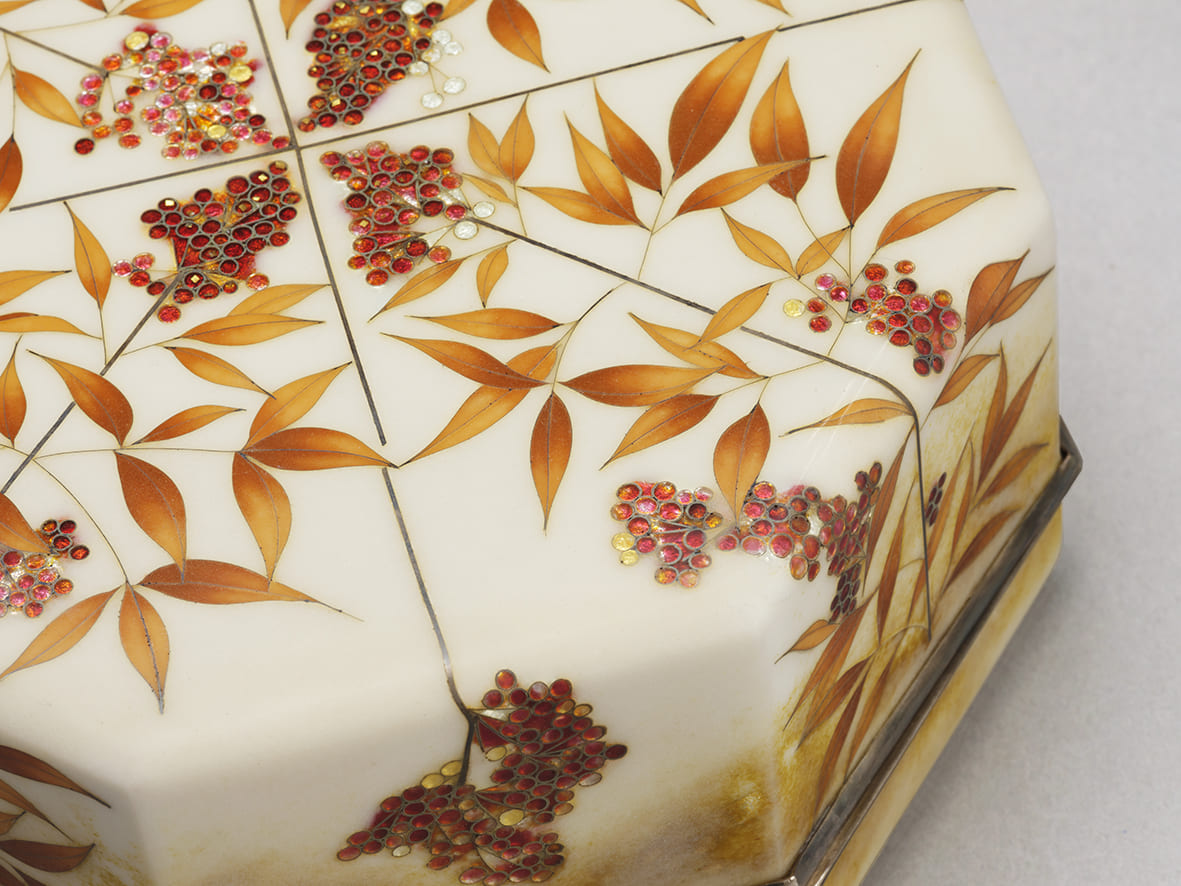
Cloisonné can be finished to a mirror shine or to a softer, deeper surface, and the choice sits on exactly this question. A high-gloss piece announces itself across a room; a piece finished more quietly shows its colour when you come close and the light moves.
The same applies to colour depth. Transparent glaze over metal produces colour that shifts with the angle of light rather than one fixed appearance.
Neither finish is better — they answer different questions. Shibui names the second answer.
How Shibui Entered English and What Changed
Shibui reached English-language design vocabulary largely through mid-twentieth-century publishing.
The American magazine House Beautiful devoted issues to the concept in 1960, presenting shibui to a large Western audience as a guiding principle for interiors, and the term entered design discourse from there.
What the translation left behind
- The astringent sense. English took the aesthetic meaning without the taste sensation underneath it.
- The stance. Shibui became a palette instruction rather than an attitude toward display.
- The time element. The idea that shibui develops through use is difficult to sell as a purchasable style.
If you want to use the word accurately, use it about a relationship with an object over time rather than about a colour swatch.
Applying Shibui Japanese Aesthetics in Daily Life
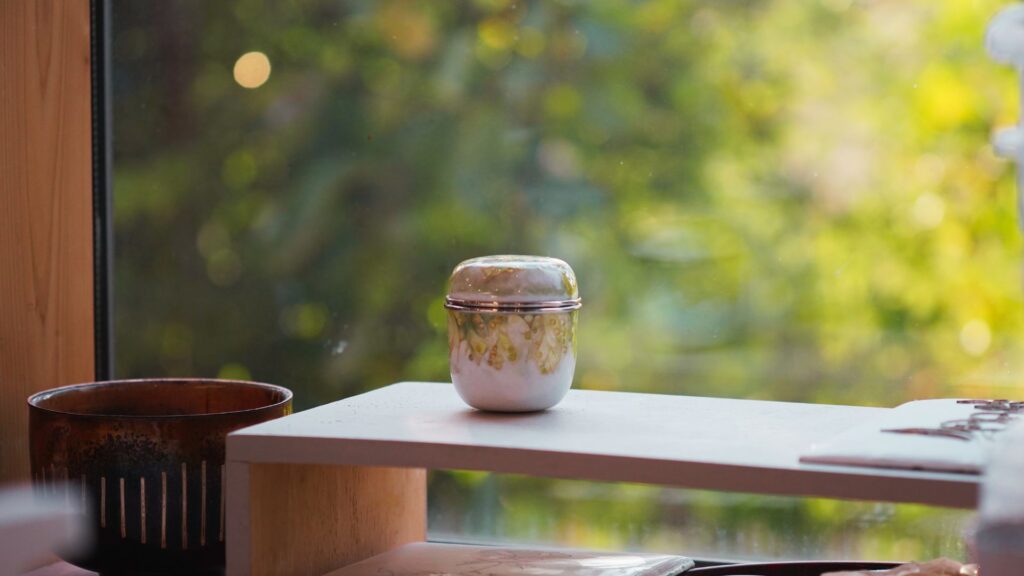
Practical translations that keep the meaning intact.
In a room
- Choose one object with genuine depth over several decorative ones
- Prefer materials that age visibly — wood, leather, iron, unglazed ceramic, indigo cloth
- Pull colours back from full saturation rather than removing colour entirely
- Let light be uneven; flat bright lighting removes the depth shibui depends on
In what you buy
A workable filter is to ask how the object will look in ten years. Materials that scuff, patinate or soften belong; materials that only degrade do not.
A caution
Shibui is a Japanese aesthetic term with a specific history, not a universal rule of good taste, and treating it as a rulebook produces the self-conscious result it describes the absence of.
Used carefully it is a useful idea: a name for the difference between something that impresses immediately and something you are still glad to own a decade later.
TAMURA-SHIPPO 田村七宝工芸
Founded in Meiji 16 (1883). We are a kiln located in Shippo-cho, Ama City, Aichi Prefecture, specializing in “Owari Shippo,” a traditional craft designated by the Ministry of Economy, Trade and Industry. We continue to produce Shippo ware in order to preserve this beautiful traditional culture. The content of this article has been fully supervised by Tamura Shippo Kogei (with AI-generated summaries included), and has been proofread with reference to reliable books and government media sources.