Cloisonné vs Enamel: What the Difference Actually Is, and Where the Words Overlap
“Cloisonné vs enamel” is a slightly misleading comparison, because the two are not alternatives. Cloisonné is one technique within enamel.
The confusion is understandable — the words are used loosely in retail listings, and several related techniques look similar in photographs.
This guide sets out the actual relationship, explains the main enamel techniques and how to tell them apart, and clarifies where “enamel” means something else entirely. We work in one of these techniques, so the practical distinctions come from the bench.
Cloisonné vs Enamel: The Basic Relationship
Enamel is the material and the general process. Cloisonné is one method of applying it.
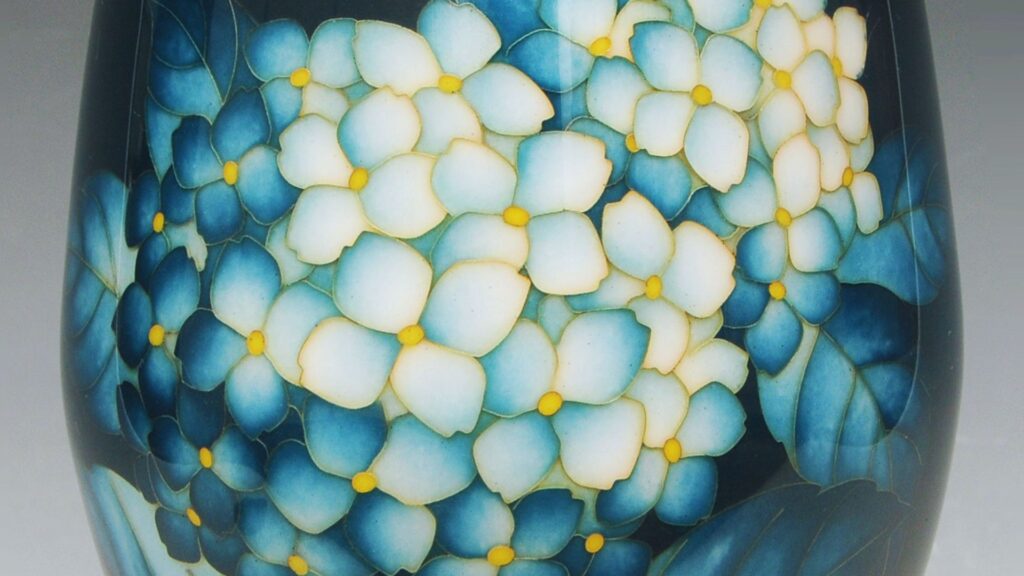
Vitreous enamel — also called porcelain enamel — is powdered glass fused to a substrate, usually metal, by firing. Cloisonné is the specific method in which thin metal wires are fixed to the surface to form compartments, which are then filled with enamel.
The relationship stated plainly
- All cloisonné is enamel
- Not all enamel is cloisonné
- Asking “is this cloisonné or enamel” is like asking whether something is a sonnet or a poem
The word cloisonné comes from the French cloison, meaning partition, and describes exactly what distinguishes the technique: the design is partitioned by wire before any colour goes in.
In Japan the enamel craft as a whole is called shippō-yaki, and the wired technique specifically is yūsen shippō — literally “wired shippō.”
How Enamel Works, Whatever the Technique
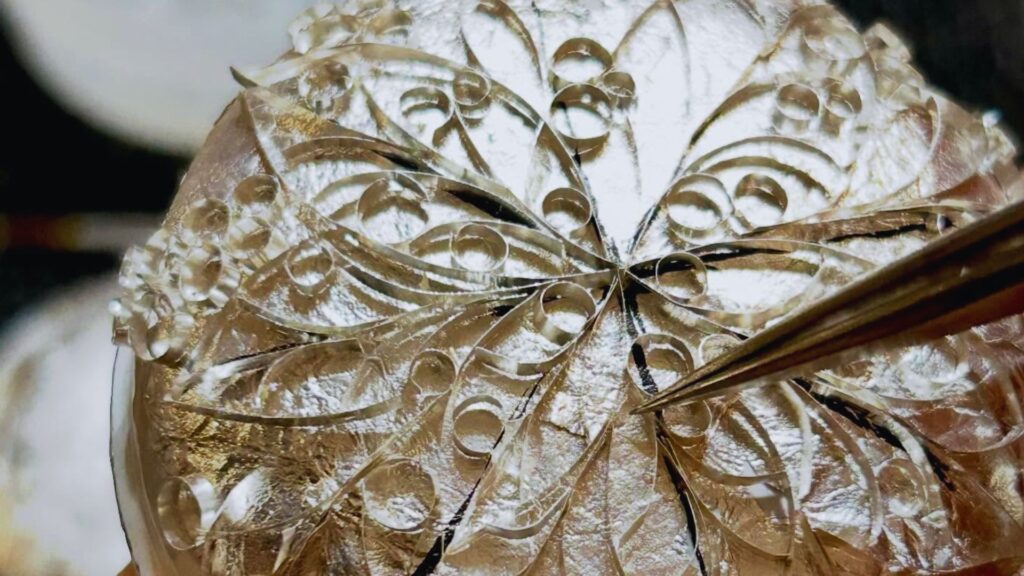
All enamel techniques share the same underlying process.
- A metal base is formed — copper, silver, gold, or steel depending on the application
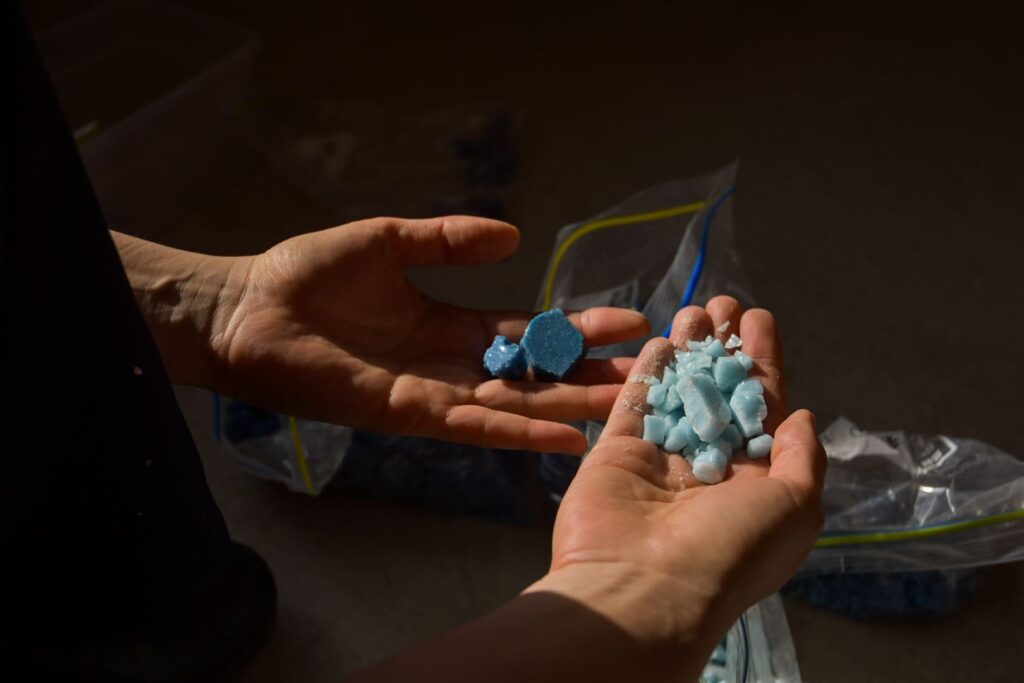
- Powdered glass, coloured by metal oxides, is applied to the surface
- The piece is fired until the glass melts and bonds to the metal
- Firing is repeated as needed, and the surface is finished
Firing temperature is constrained by the metal rather than by the glass: copper melts at about 1,085°C, so enamel on copper must fire well below that. Around 800°C is typical.
Why the colour behaves differently from paint
Because the colour is glass rather than pigment in a binder, enamel does not fade with light exposure and cannot be worn away by handling. The trade-off is that a glass layer on metal chips under impact.
This applies equally to every technique below. The techniques differ in how the enamel is contained and shaped, not in what the material fundamentally is.
Cloisonné vs Champlevé and the Other Enamel Techniques
| Technique | How compartments are formed | Visual result |
|---|---|---|
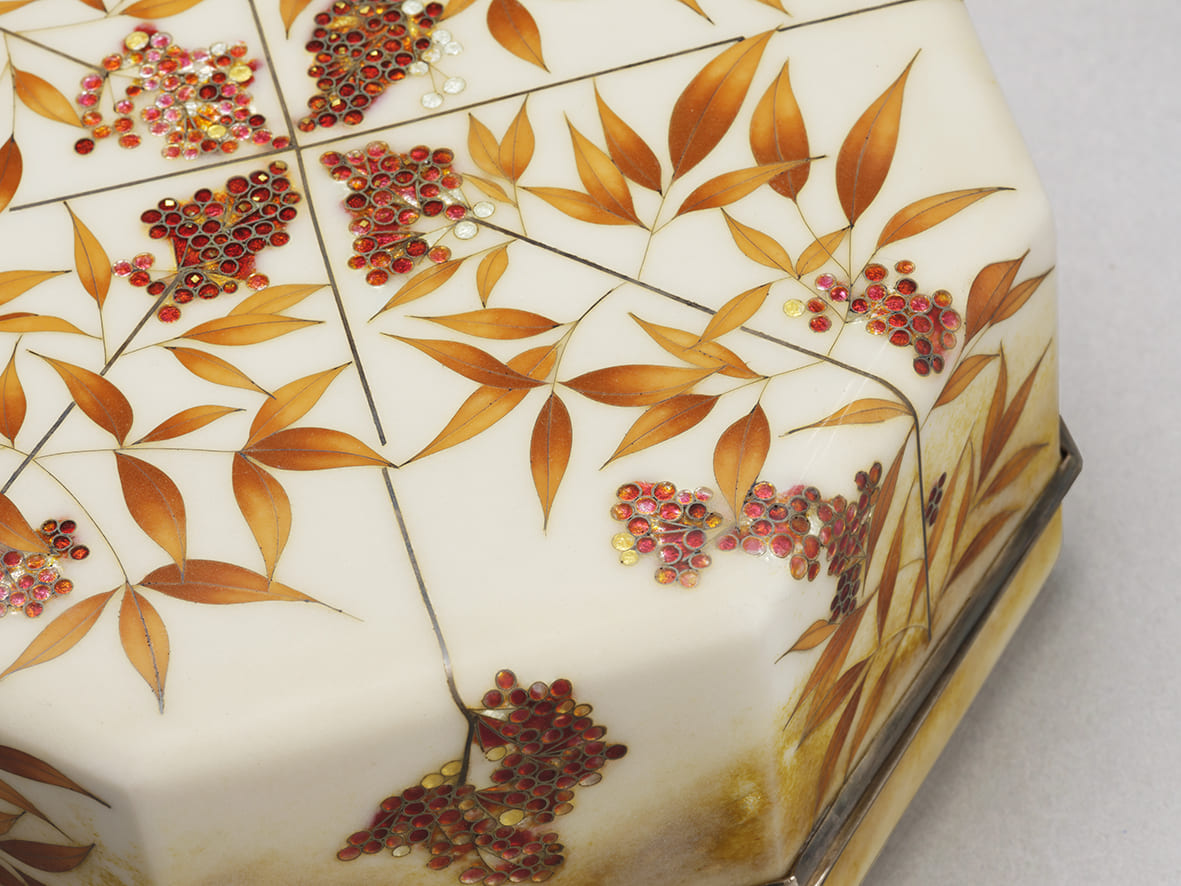
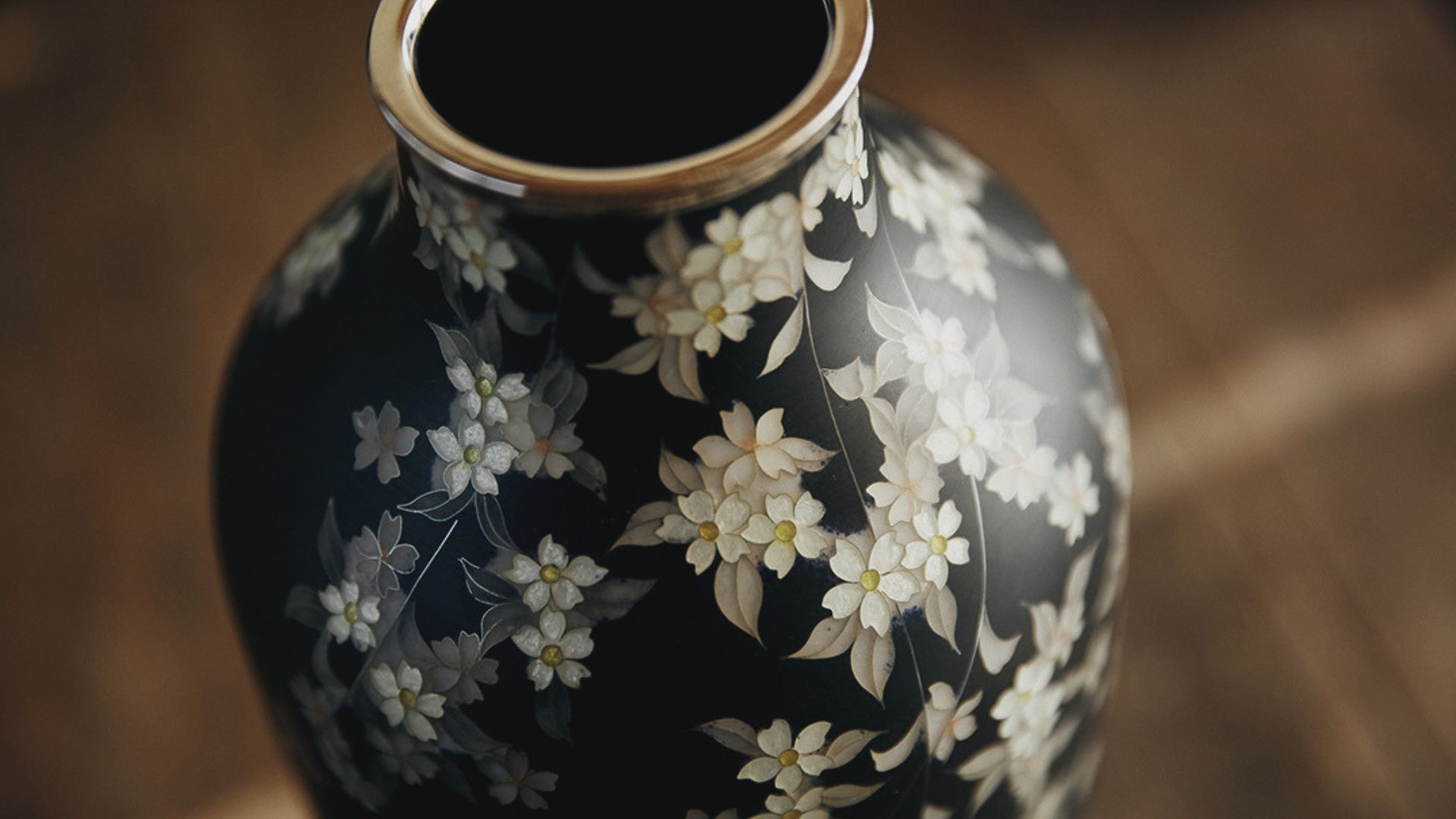
| Cloisonné | Wires added on top of the surface | Fine metal lines outlining each colour field |
| Champlevé | Cavities cut or cast into the metal | Broader metal areas between colours |
| Basse-taille | Metal engraved, then covered with transparent enamel | Pattern visible through the glaze |
| Plique-à-jour | Compartments with no backing | Light passes through, like a stained glass window |
| Painted enamel | No compartments; painted on a fired ground | Continuous painterly image |
| Grisaille | White enamel built up over a dark ground | Monochrome, tonal |
Cloisonné vs champlevé: the practical test
Cloisonné adds metal; champlevé removes it. That difference is visible in the finished piece.
In cloisonné the dividing lines are thin and consistent, because they are made from ribbon wire of a set width. In champlevé the metal between colours is usually broader and more variable, because it is whatever was left after the cavities were cut away.
Japanese equivalents
- Cloisonné — yūsen shippō
- Plique-à-jour — shōtai shippō, where the copper base is dissolved away after firing
- Champlevé — closest to zōgan shippō, in which the base is recessed and filled
- Japan also developed musen shippō, wireless enamel, in which wires are removed before final firing so colours blend
Cloisonné vs Enamel in Everyday Language
The words are used differently in different settings, which accounts for much of the confusion.
Where “enamel” means something else
- Enamel paint — a hard-drying paint, with no glass and no firing involved. Entirely unrelated to vitreous enamel
- Nail enamel — a lacquer, borrowing the word for its glossy finish
- Tooth enamel — biological, and named for its hardness and gloss
- Enamelware — usually steel cookware with a fired glass coating. This is vitreous enamel, applied industrially
Only the last of these is the same material as cloisonné. The first three share the word because of appearance, not composition.
Enamel and hōrō in Japanese
Japanese distinguishes by use and base metal. Shippō generally refers to decorative enamel on copper, silver or gold, while hōrō (琺瑯) usually refers to enamel on steel for practical objects such as pots and signs.
The distinction is conventional rather than technical — the underlying process is the same. Note also that Chinese uses the same characters, 琺瑯, for cloisonné generally, so the term’s scope differs between the two languages.
How to Tell Cloisonné from Other Enamel Work
A sequence for identifying a piece in hand.
- Look for metal lines between colours. Present and thin: likely cloisonné. Present and broad: possibly champlevé. Absent: painted enamel, wireless enamel, or industrial enamelware
- Hold it to the light. If light passes through the coloured areas, the backing has been removed — plique-à-jour or shōtai shippō
- Look for a pattern beneath the colour. An engraved design visible through transparent glaze indicates basse-taille
- Feel the surface. Fired vitreous enamel is glass-hard and cool. Enamel paint is warmer and softer, and can be marked with a fingernail
- Check the base metal where exposed. Copper or silver suggests decorative enamel; steel suggests industrial enamelware
The one test that resolves most cases is simply whether visible metal lines separate the colours, because that is the defining feature of the cloisonné technique.
Does the Distinction Affect Value?
It affects what you are assessing, more than it sets a price.
What actually determines value
- Execution quality — fineness of wire, evenness of surface, precision at difficult points
- Maker and period
- Condition — chips and hairline cracks in the glass layer matter considerably
- Scale and complexity
No technique is inherently more valuable than another. A poorly executed cloisonné piece is worth less than a finely executed champlevé one, and vice versa.
Where the technique does matter practically
- Plique-à-jour and shōtai shippō are structurally fragile, because there is no metal backing supporting the glass
- Wired work shows its quality in the wire, so that is where to look
- Wireless work shows its quality in the colour transitions, since there are no lines to hide behind
Cloisonné vs Enamel: A Summary You Can Use
| Question | Answer |
|---|---|
| Is cloisonné a type of enamel? | Yes. It is one technique within vitreous enamel |
| Is all enamel cloisonné? | No. Champlevé, plique-à-jour, painted enamel and others are not |
| What defines cloisonné? | Metal wires fixed to the surface to form compartments before filling |
| Is enamel paint the same thing? | No. It contains no glass and is not fired |
| Is enamelware cookware the same material? | Yes, applied industrially to steel |
| Which is better? | Neither. Execution determines quality |
The single sentence worth carrying away: enamel is glass fused to metal by fire, and cloisonné is what you call it when the design has been fenced off in wire first.

TAMURA-SHIPPO 田村七宝工芸
Founded in Meiji 16 (1883). We are a kiln located in Shippo-cho, Ama City, Aichi Prefecture, specializing in “Owari Shippo,” a traditional craft designated by the Ministry of Economy, Trade and Industry. We continue to produce Shippo ware in order to preserve this beautiful traditional culture. The content of this article has been fully supervised by Tamura Shippo Kogei (with AI-generated summaries included), and has been proofread with reference to reliable books and government media sources.