Shippo Ware: What the Term Covers, Where It Is Made, and What Collectors Mean by It
“Shippo ware” turns up in auction catalogues, museum labels and dealer listings, usually without explanation. It is simply the Japanese name for cloisonné enamel, carried into English.
The term is worth understanding on its own terms, because the Japanese word covers a slightly different range from the English one, and that difference occasionally matters.
This guide explains what shippo ware means, what it includes, where it is made, and how the term is used in the collecting market. We produce it, in the region the designated version of it comes from.
What Is Shippo Ware?
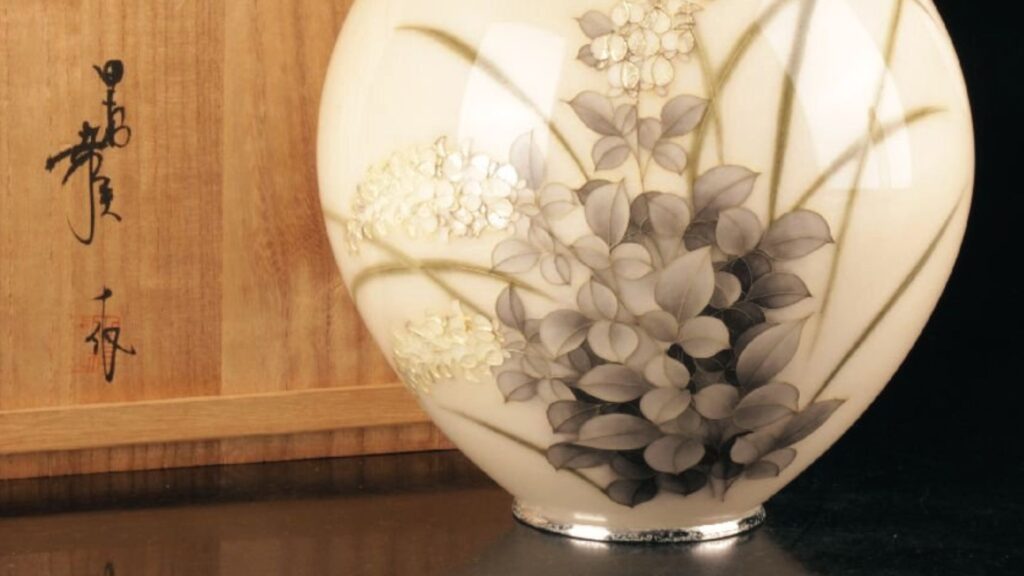
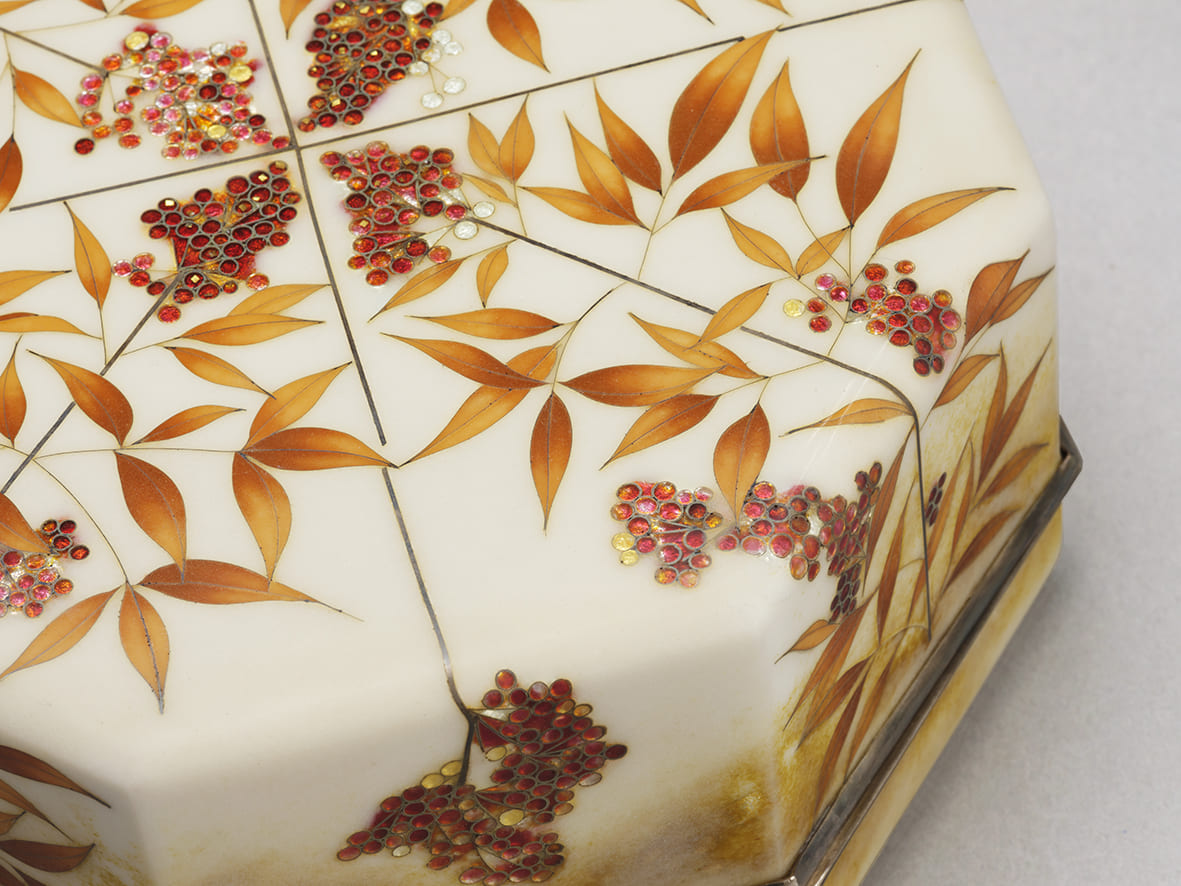
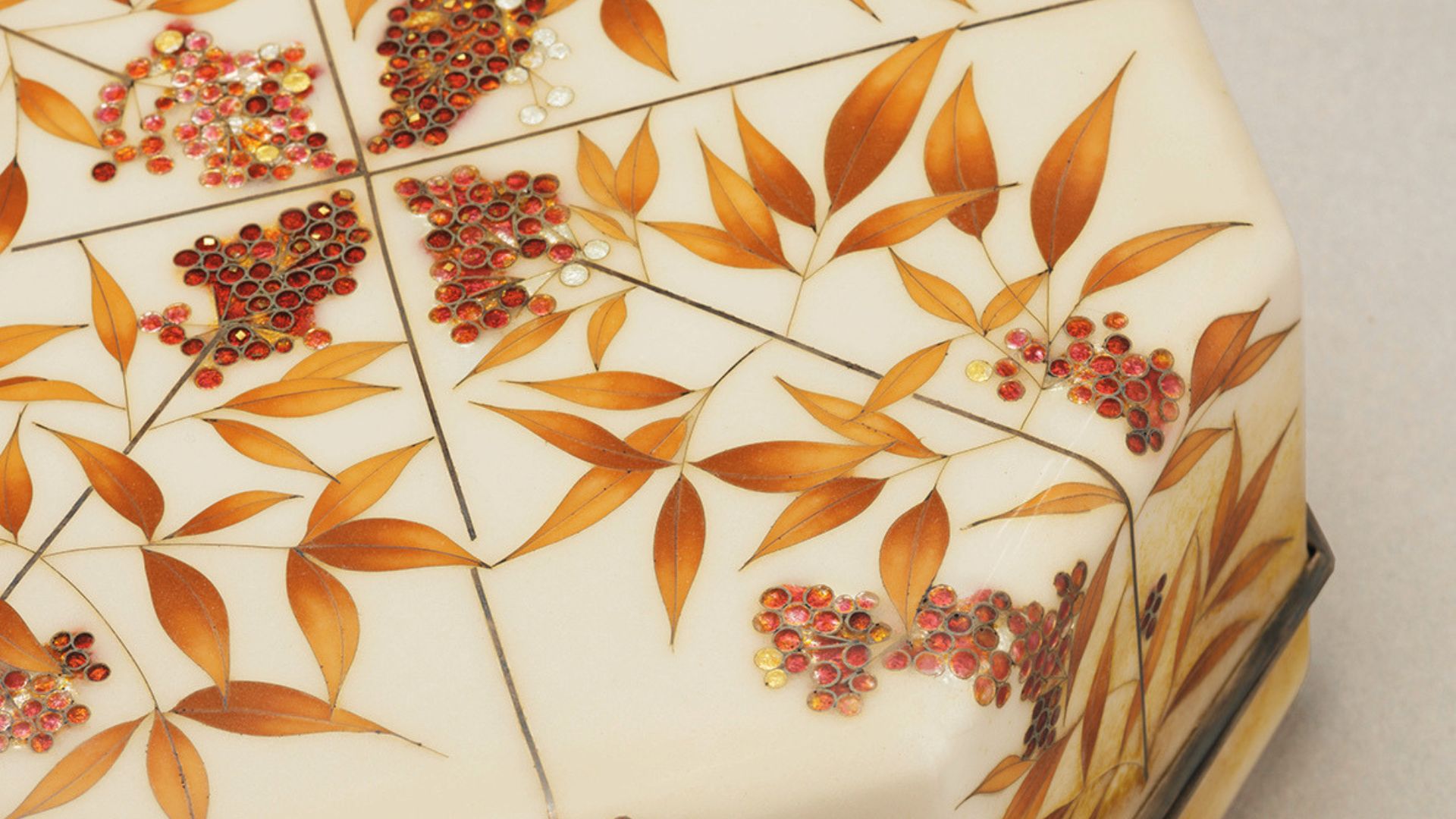
Shippo ware is Japanese enamel on metal — powdered glass fused onto a copper or silver base by firing at around 800°C. The Japanese term is shippō-yaki (七宝焼): shippō meaning seven treasures, yaki meaning fired.
Where the name comes from
The word shippō refers to seven precious substances described in Buddhist scripture — gold, silver, lapis lazuli, crystal, giant clam shell, coral and agate — although the exact list varies between sutras.
Two accounts of the craft’s name circulate: that the ware was named for being as beautiful as those seven treasures, and that the name refers to the jewel-like mineral materials used in the glaze. Neither has been settled.
A frequent confusion
The name ends in “fired,” which leads English speakers to assume shippo ware is pottery. It is not. Shippo ware is classified in Japan as metalwork, and clay is not involved at any stage.
Shippo Ware and Cloisonné: Are They the Same Thing?
Nearly, but the two words map slightly differently.
| Term | Scope |
|---|---|
| Cloisonné | Strictly, enamel in compartments formed by applied wire |
| Shippō / shippo ware | Japanese enamel on metal generally, including wireless and other variants |
In Japanese, wired work has its own name — yūsen shippō, “wired shippō” — which is the direct equivalent of cloisonné. Shippō alone is the broader category.
In practice, English-language listings use “shippo ware” and “Japanese cloisonné” interchangeably, and this rarely causes problems. The distinction matters mainly when a piece is wireless: calling musen shippō “cloisonné” is technically inaccurate, since there are no cloisons.
Other terms encountered
- Hōrō (琺瑯) — in Japanese, enamel on steel for practical objects such as pots and signs. Note that Chinese uses the same characters for cloisonné generally, so the scope differs by language
- Jingtailan (景泰藍) — the Chinese term, named after the reign of the Jingtai Emperor (1450–1456)
The Types of Shippo Ware
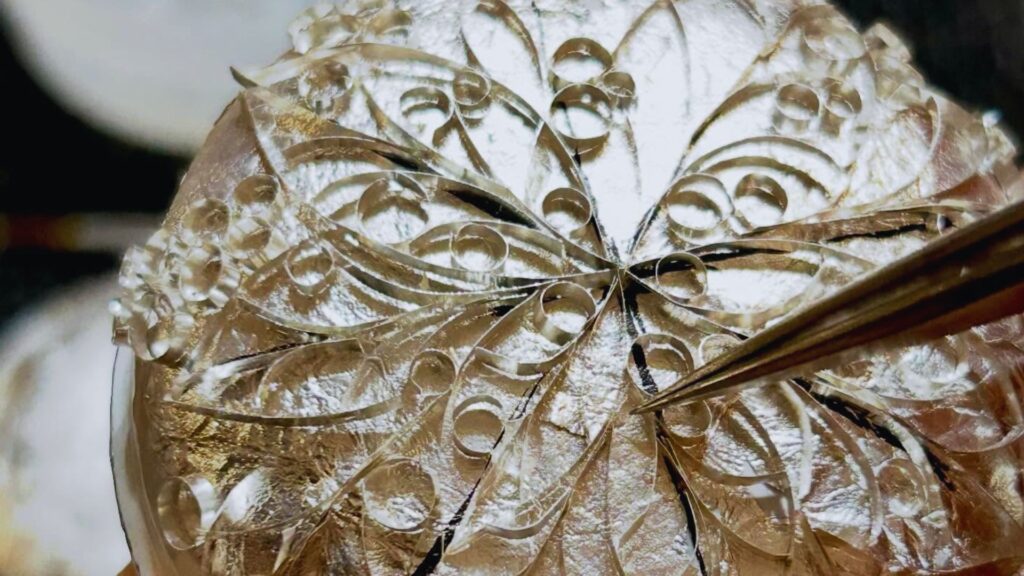
Japanese enamel divides along two axes: what the base is, and whether wires remain visible.
By wire
- Yūsen shippō (wired) — silver wires remain in the finished piece as outlines. The representative technique of the Owari region
- Musen shippō (wireless) — wires removed before final firing so colours blend. Developed by Namikawa Sōsuke (1847–1910) to achieve effects closer to Japanese painting
By base
- Kinzokutai — standard metal base
- Shōtai shippō — the copper base dissolved away with acid after firing, leaving translucent enamel. Comparable to European plique-à-jour, and equally fragile
- Tōtai shippō — parts of the base pierced and filled with transparent glaze
- Ginbari — transparent glaze over textured silver foil, producing a strong internal shimmer
- Doro shippō — opaque glazes; the dominant Japanese style before transparent glazes came into use
A quick identification test: fine metal lines outlining every colour means wired; colours melting into one another means wireless; light passing through means the base has been removed.
Where Shippo Ware Is Made
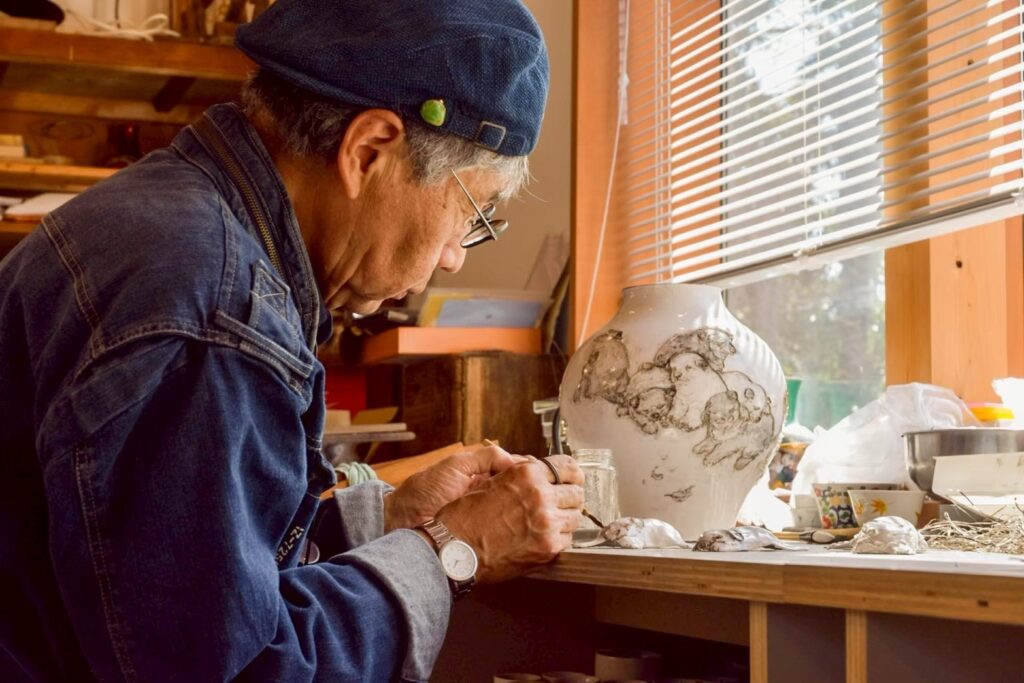
Production has always been regional, and one region dominates.
Owari shippō
The mainstream of Japanese shippo ware is Owari shippō, produced in Ama City and Nagoya City in Aichi Prefecture.
It was designated a national Traditional Craft Product by the Minister of Economy, Trade and Industry on 5 April 1995, in the 29th round of designations. The official description specifies a copper or silver base with glass glaze, motifs of flowers, birds and landscape, and identifies wired shippō as the region’s representative technique.
Source: Aichi Prefecture, Traditional Crafts of Aichi — Owari Shippō.
The town named after the craft
Shippō-chō in Ama City takes its name from the craft — an industry naming its own geography rather than the reverse.
The technique took root here after Kaji Tsunekichi (1803–1883) worked out a method during the Tenpō era (1830–1844) and taught Hayashi Shōgorō of Tōshima village, now part of Shippō-chō.
Other centres
- Kyoto — an earlier and separate lineage, with enamelled door pulls and nail covers produced for buildings including Katsura Imperial Villa. Namikawa Yasuyuki (1845–1927) worked here
- Tokyo — where Namikawa Sōsuke worked
- Nagoya — a major workshop centre in the late Meiji period
Shippo Ware in the Collecting Market
How the term is used commercially, and what to expect.
The broad periods
| Period | Character |
|---|---|
| Meiji (1868–1912) | The most collected period; technically refined, made substantially for export and exhibition |
| Taishō (1912–1926) | Continued high-quality workshop production |
| Wartime | Production severely constrained; core materials classified as military supplies |
| Occupation (1945–1952) | Substantial souvenir production; pieces may carry occupation-era marks |
| Later 20th century | Mixed, from workshop pieces to mass-market production |
Two things worth knowing before buying
First, most antique shippo ware is unmarked. Workshop production and export volume both worked against individual signing, and many pieces carried paper labels that are long gone. An absence of marks says little about quality.
Second, the term “shippo ware” carries no quality guarantee. It describes a technique and an origin, not a standard. Assessment has to be done on the object.
What to assess
- The tightest curve in the design — where wire setting shows
- The surface across a low angle — glaze should sit level with the wires
- Exposed metal at rim and foot — wear consistent with the claimed age
- Chips and hairlines — enamel fails at edges first, and a crack in the glass layer will spread
Shippo Ware Today
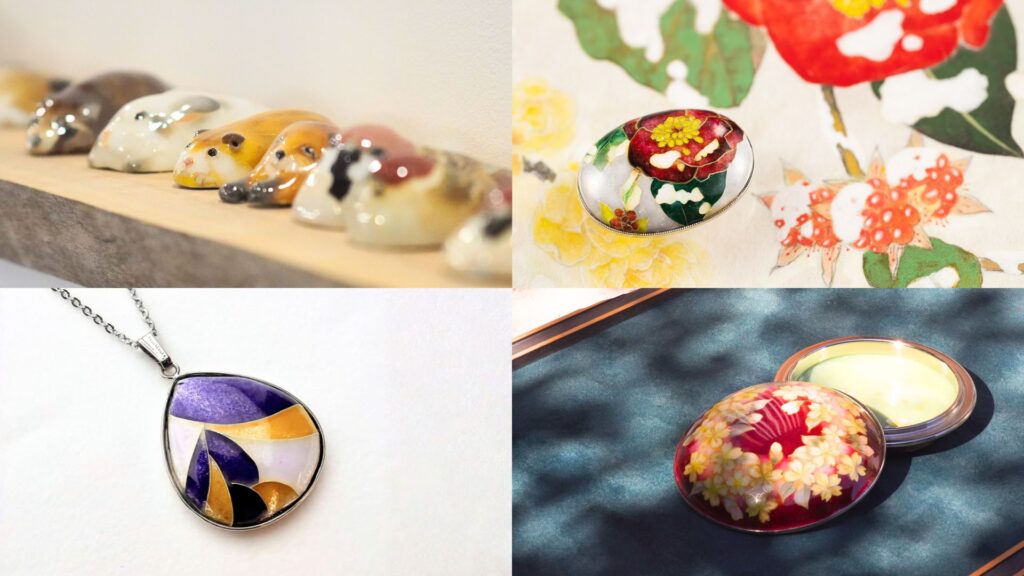
The current industry is small and worth describing accurately.
Scale
As of May 2017, the Shippō-chō producers’ cooperative had eight member businesses and the Nagoya cooperative seven. This is a small regional industry, not a large sector.
What is made now
- Vases, plates and decorative panels
- Jewellery — pendants, earrings, brooches, rings
- Small objects and accessories
- Commemorative and presentation pieces
The shift toward smaller objects reflects a straightforward change in Japanese homes: there are fewer alcoves in which to display a large vase than there were a century ago.
Where to see and buy it
- Ama City Shippō-yaki Art Village in Shippō-chō — the regional centre for display and experience
- Department store craft floors in major Japanese cities
- Workshops in the producing region
- Museum collections for historical work, including institutions in Japan and abroad holding Meiji-period pieces
For anyone encountering the term for the first time: shippo ware is glass fused to metal, made in a small region of central Japan, and the quality of any given piece is legible on its surface if you know where to look.

TAMURA-SHIPPO 田村七宝工芸
Founded in Meiji 16 (1883). We are a kiln located in Shippo-cho, Ama City, Aichi Prefecture, specializing in “Owari Shippo,” a traditional craft designated by the Ministry of Economy, Trade and Industry. We continue to produce Shippo ware in order to preserve this beautiful traditional culture. The content of this article has been fully supervised by Tamura Shippo Kogei (with AI-generated summaries included), and has been proofread with reference to reliable books and government media sources.