Japanese Traditional Souvenirs: What to Buy, Where to Buy It, and What to Avoid
Japan makes buying souvenirs unusually easy and unusually confusing at the same time. There is a domestic gift culture with its own vocabulary, a large tourist market, and a craft sector that operates on entirely different terms from both.
The practical question is which of the three you are shopping in, because the answer changes what you should pay and what you should expect.
This guide covers the categories that travel well, the ones that cause problems at customs or in a suitcase, and how to tell a genuine regional craft from something made for the souvenir shelf.
Japanese Traditional Souvenirs: Understanding Omiyage First
Japan distinguishes between two kinds of souvenir, and the distinction shapes what is sold where.
| Term | Meaning |
|---|---|
| Omiyage (お土産) | A regional gift brought back for others — usually food, usually individually wrapped, bought at stations and airports |
| Kinen-hin (記念品) | A keepsake bought for oneself to mark an occasion |
Omiyage is a social obligation as much as a gift: travellers routinely bring boxed sweets back for colleagues, which is why station shops sell region-specific food in boxes of individually wrapped portions.
This explains a layout that puzzles many visitors. The most prominent souvenir shops in Japan are food shops, because the domestic market for souvenirs is overwhelmingly a market for edible gifts. Craft occupies a smaller and separate retail space.
Japanese Traditional Souvenirs Under ¥3,000
Inexpensive items that are genuinely made in Japan rather than merely themed.
- Tenugui — printed cotton cloths, used as towels, wrapping, or wall hangings. Light, flat, and made in enormous design variety
- Furoshiki — square wrapping cloths with a practical folding tradition behind them
- Hashi (chopsticks) — regional lacquered varieties; Wakasa lacquer chopsticks from Fukui are a designated traditional craft
- Washi paper — letter sets, notebooks and envelopes from papermaking regions
- Sensu — folding fans, from simple printed versions upward
- Omamori — shrine and temple amulets, bought where they are made
- Japanese stationery — pens and notebooks; not traditional, but the quality-to-price ratio is high
Tenugui is the most consistently practical answer in this price range: flat, light, unbreakable, made in Japan, and useful rather than ornamental.
Japanese Traditional Souvenirs Worth Investing In
Items where a higher price buys a genuinely different object.
Ceramics
Regional wares from Arita, Mino, Hasami, Bizen and elsewhere. Buying a single well-made rice bowl or teacup is more satisfying than a boxed set of lesser pieces, and it survives the journey more easily.
Kitchen knives
Japanese knives from Sakai, Seki and other centres are among the country’s best-known exports. Check airline rules and pack them in hold baggage; they cannot go in cabin luggage.
Cast ironware
Nambu ironware from Iwate. Durable and long-lasting, but heavy — a full-size kettle is a significant part of a luggage allowance.
Lacquerware
Wajima, Aizu and Yamanaka lacquer. Ask specifically whether a piece is natural urushi lacquer or a synthetic coating; both are sold, at very different prices. Urushi can also cause skin reactions in a small number of people.
Cloisonné enamel
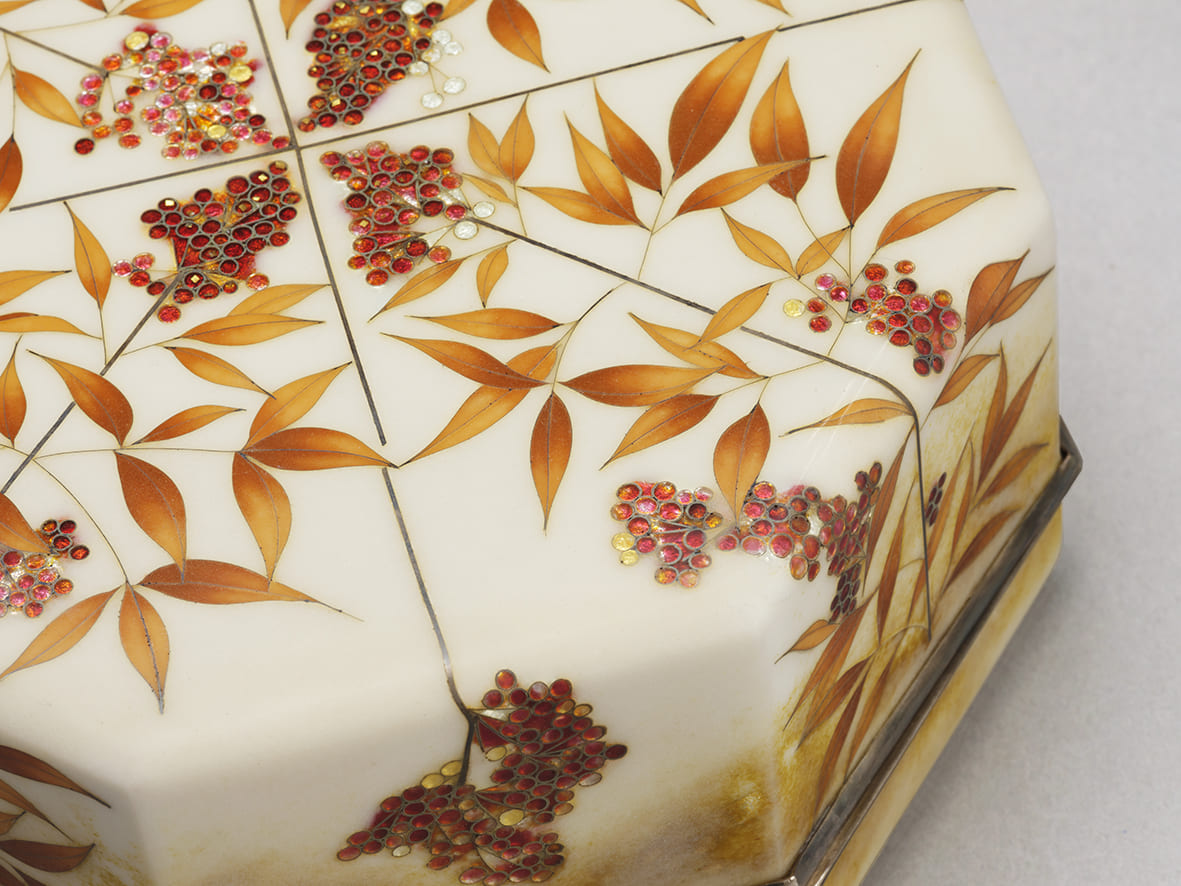
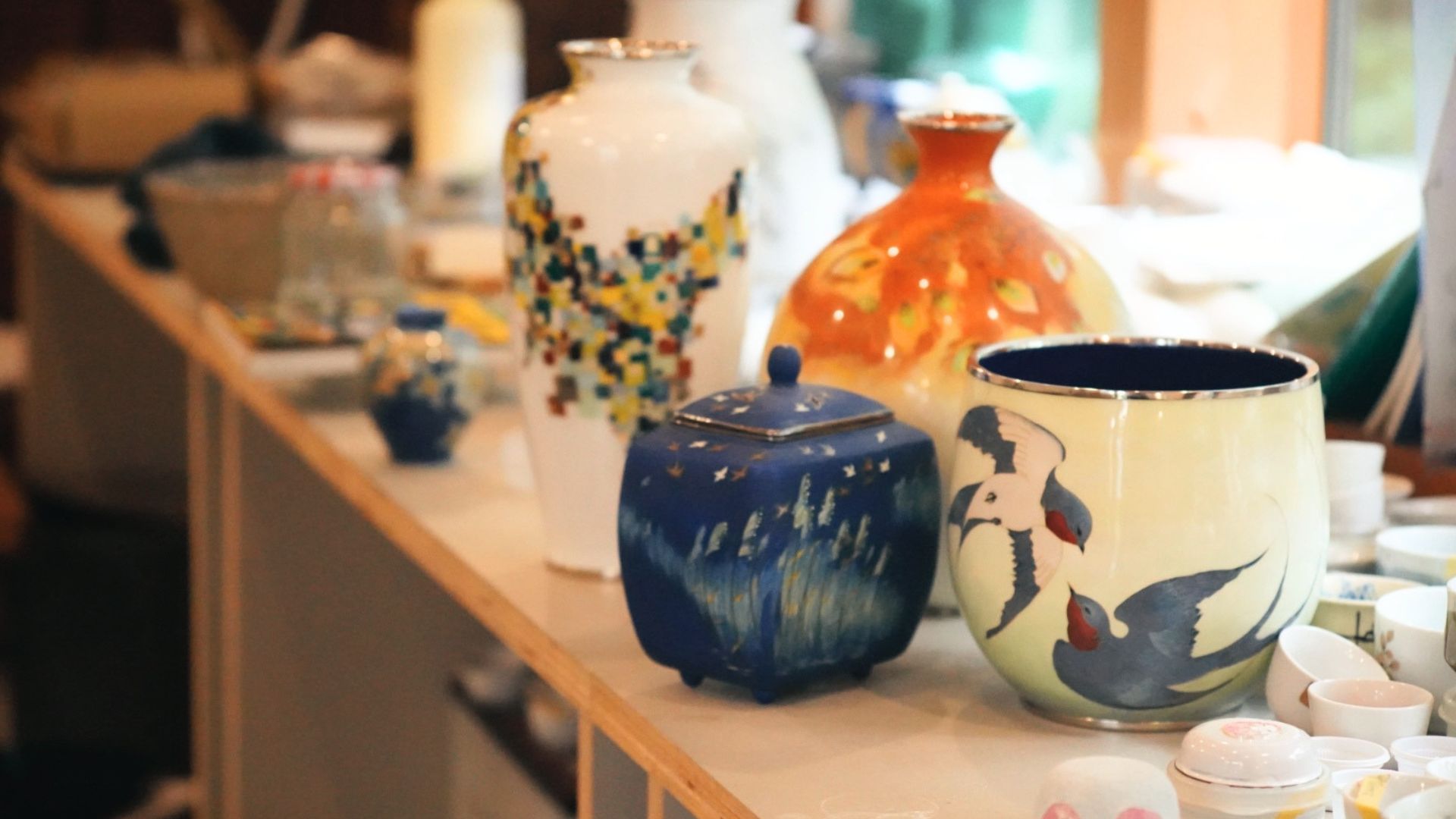
Shippō-yaki, produced principally in Aichi Prefecture. Practical for travel because the body is metal — it does not shatter — although the glass surface will chip if struck. Small pieces and jewellery travel particularly well.
Where to Buy Japanese Traditional Souvenirs
The four retail environments
- Station and airport shops — convenient, food-focused, and priced for convenience
- Department store craft floors — reliable quality, wide selection, higher prices, often with knowledgeable staff
- Craft centres in producing regions — the best information and often demonstrations; requires travelling to the region
- Tourist-district souvenir shops — highly variable; much of the stock is imported and themed rather than made locally
How to check whether something is a genuine regional craft
Look for the Densan mark, the official label of nationally designated Traditional Craft Products, which combines the character 伝 with a red circle. Its presence confirms the item was made in the designated area using the designated techniques.
Its absence does not mean an item is inauthentic — plenty of good work sits outside the designation system — but its presence is a reliable positive signal.
Two questions do most of the remaining work: where specifically was this made, and which parts were done by hand. A shop selling genuine regional craft can answer both.
What Not to Buy as a Japanese Traditional Souvenir
Practical problems
- Fresh food and most fruit — restricted or prohibited by many countries’ agricultural rules
- Anything requiring refrigeration
- Full-size ceramics without proper packing — ask the shop to pack for air travel
- Knives in cabin baggage
- Electronics — voltage and warranty coverage vary by region
Regulatory problems
Some items made from protected materials — certain corals, tortoiseshell, and ivory — are restricted under international convention and can be confiscated. This affects some antique and traditional accessories. If a seller cannot document the material, do not buy it to take abroad.
Value problems
A large share of stock in tourist-district souvenir shops is mass-produced and often imported. Printed kanji signs, factory-made “samurai swords,” and generic fan-motif goods are the usual examples.
There is nothing wrong with buying something inexpensive as a memento. The problem arises when a mass-produced item is bought at a craft price on the assumption that it is one.
Japanese Traditional Souvenirs by Recipient
| Recipient | Suggestion | Reason |
|---|---|---|
| Colleagues, as a group | Boxed individually wrapped sweets | The domestic convention; easy to share |
| Someone who cooks | A knife, or a single good ceramic bowl | Used rather than displayed |
| Someone who writes | Washi letter set, brush, or ink | Light and inexpensive to post |
| Tea or coffee drinker | A yunomi cup or a cast iron pot | Daily use |
| A significant occasion | Cloisonné or lacquer, marked with a motif | Meaning attached to the object |
| Children | Stationery, kokeshi doll, small furoshiki | Robust and inexpensive |
On motifs for gifts
If a piece carries a Japanese motif, the meaning is usually specific. Crane for longevity and lasting partnership, cherry blossom for new beginnings, hemp leaf for a child’s healthy growth, the shippō pattern of interlocking circles for connection without end.
Two conventions to observe: avoid giving sets of four, since the number reads as death in Japanese, and avoid chrysanthemums as cut flowers, which are associated with funerals — though the chrysanthemum motif on an object is auspicious.
Bringing Japanese Traditional Souvenirs Home Safely
Packing
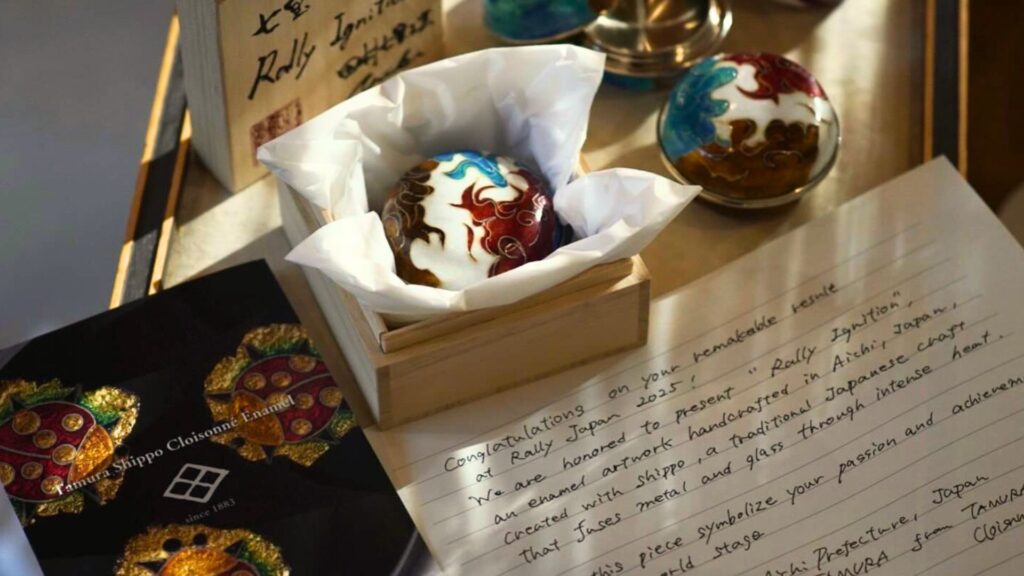
- Ask the shop to pack fragile items. Japanese shops pack thoroughly as a matter of course and will usually do it for air travel if asked
- Pack breakables in the middle of a case, surrounded by clothing, never against the outer wall
- Knives and blades go in hold baggage, wrapped
- Keep receipts for tax-free purchases and for any customs declaration
Tax-free shopping
Japan operates a tax-free scheme for foreign visitors at registered shops, with a minimum purchase threshold and a passport requirement. Rules and procedures change periodically, so confirm the current requirements at the point of sale rather than relying on older guidance.
Shipping
For anything heavy or fragile, international shipping from the shop is often the better decision, and many craft shops arrange it routinely. Compare the shipping cost against the risk and the luggage weight before deciding to carry it.

TAMURA-SHIPPO 田村七宝工芸
Founded in Meiji 16 (1883). We are a kiln located in Shippo-cho, Ama City, Aichi Prefecture, specializing in “Owari Shippo,” a traditional craft designated by the Ministry of Economy, Trade and Industry. We continue to produce Shippo ware in order to preserve this beautiful traditional culture. The content of this article has been fully supervised by Tamura Shippo Kogei (with AI-generated summaries included), and has been proofread with reference to reliable books and government media sources.