Japanese Symbols and Their Meanings: Animals, Plants, Objects and Numbers
Japanese symbolic meanings are unusually systematic. A crane on a wedding gift, a particular number of items in a set, a colour on an envelope — each carries a reading most Japanese people recognise.
Some meanings come from Buddhism or Chinese tradition, and a surprising number come from wordplay, since Japanese has many homophones.
This guide covers the main categories, the reasoning behind them, and which conventions are still observed in practice today.
How to Read Japanese Symbols and Meanings
Japanese symbolic meanings arise from a small number of mechanisms, and knowing them allows educated guesses about unfamiliar motifs.
The four main sources
- Observed characteristics. Bamboo bends without breaking, so it stands for resilience.
- Wordplay (goroawase). Many meanings rest on one word sounding like another.
- Imported tradition. A large share arrived from China, sometimes carrying a Chinese pun with it.
- Religious association. Buddhist and Shinto contexts assign meanings, including negative ones.
Wordplay is the mechanism most often missed by foreign readers, and it explains meanings that otherwise look arbitrary. The frog, kaeru, is a charm for safe return and for money coming back, because the same sound means “to return.”
A caution before the lists
Meanings vary by region, era and context, and many motifs have more than one accepted reading. Treat the following as common readings rather than fixed definitions.
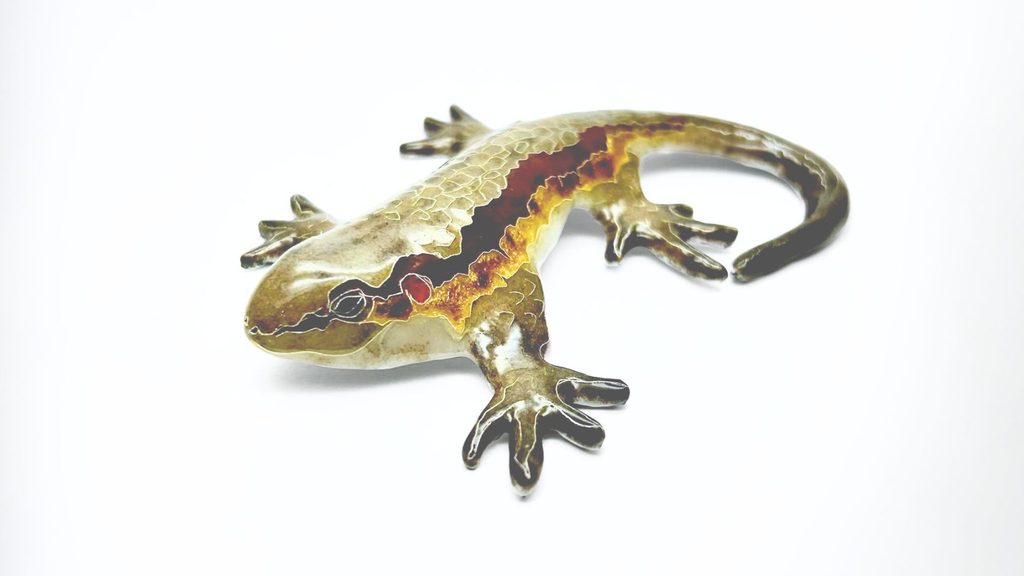
Japanese Animal Symbols and Their Meanings
| Animal | Japanese | Common meaning | Basis |
|---|---|---|---|
| Crane | Tsuru | Longevity, marital fidelity | Long-term pair bonding; a saying crediting 1,000 years |
| Tortoise | Kame | Longevity | The same saying, crediting 10,000 years |
| Koi carp | Koi | Perseverance, success | Chinese legend of a carp ascending a waterfall |
| Fox | Kitsune | Messenger of Inari; also cunning | Shinto association with the rice deity |
| Cat | Neko | Beckoning fortune | The maneki-neko figure |
| Frog | Kaeru | Safe return, money returning | Homophone with “to return” |
| Dragonfly | Tombo | Victory, not retreating | Belief that dragonflies do not fly backwards |
| Butterfly | Chō | Transformation; in pairs, marital harmony | Metamorphosis |
| Rabbit | Usagi | Cleverness, the moon | The moon-rabbit legend |
The maneki-neko in detail
The beckoning cat is the most recognisable Japanese lucky object internationally, and its details are read. A raised right paw is commonly said to invite money and a raised left paw to invite people or customers, though sources disagree and some reverse the two. Colour is also read: white for general good fortune, black often for warding off misfortune, gold for wealth.
Because interpretations conflict, the reliable statement is that the cat reads as generally auspicious.
Japanese Plant Symbols and Their Meanings
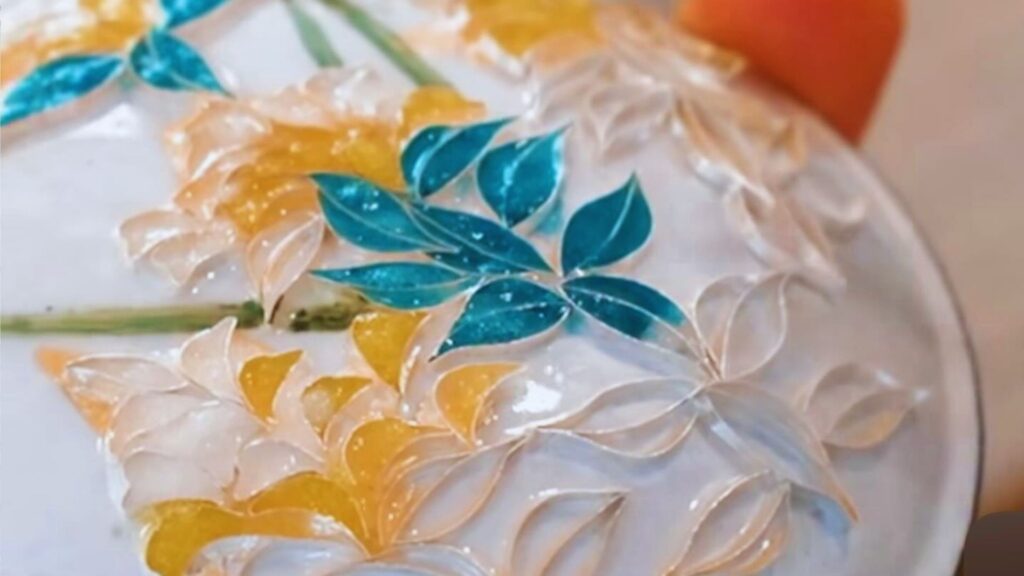
- Pine (matsu) — longevity and steadfastness; it stays green through winter
- Bamboo (take) — resilience and honesty; it bends far without snapping
- Plum (ume) — perseverance and hope; it flowers while snow is still on the ground
- Cherry blossom (sakura) — beauty and transience
- Chrysanthemum (kiku) — longevity and imperial authority; the imperial crest is a stylised chrysanthemum
- Peony (botan) — prosperity and high status, from Chinese tradition
- Lotus (hasu) — purity rising from mud, with strong Buddhist funerary associations in Japan
- Hemp leaf (asanoha) — strong healthy growth; traditionally used on children’s clothing
The three friends of winter
Pine, bamboo and plum are grouped as shōchikubai (松竹梅), imported from Chinese tradition and used for New Year and celebrations.
A practical note: the same three words are widely used in Japanese restaurants as grade labels, with matsu the most expensive and ume the least, so the phrase carries an entirely mundane secondary meaning in daily life.
Japanese Symbols and Meanings in Everyday Objects
- Daruma doll — perseverance and goal-setting. One eye is painted in when a goal is set, the other when it is achieved. Modelled on Bodhidharma.
- Omamori — cloth amulets from shrines and temples for specific purposes: traffic safety, study, health, childbirth. By convention they are not opened.
- Ema — wooden plaques on which wishes are written and hung at shrines
- Senbazuru — one thousand folded paper cranes, associated with recovery and with wishes
- Torii gate — marks the boundary of a Shinto sacred space
- Shimenawa — twisted rice-straw rope marking something as sacred or purified
- Koinobori — carp streamers flown around 5 May, expressing wishes for children’s growth
The daruma is a clear example of a symbol used rather than displayed: bought blank, marked at the start of an undertaking, and traditionally returned to a temple to be burned at year’s end.
Numbers and Colours in Japanese Symbols and Meanings
These matter more in practical gift-giving than most motifs do.
Numbers
| Number | Reading | Association |
|---|---|---|
| 4 | shi — also the word for death | Avoided; hospitals and hotels often skip floor and room 4 |
| 9 | ku — also suffering | Avoided in some contexts |
| 7 | — | Auspicious; the Seven Lucky Gods, Buddhist memorial cycles |
| 8 | — | Auspicious; the character 八 widens toward the base, read as expanding fortune |
The avoidance of four is genuinely observed in modern Japan — it is visible in building floor numbering and in how tableware is sold. Sets of five are standard for this reason.
Colours
- Red and white together — celebration; used on gift envelopes and ceremonial decorations
- Black and white together — mourning; used at funerals
- Purple — historically high rank and nobility
- Gold and silver — used on envelopes for weddings and major celebrations
The red-white and black-white pairing is strictly observed. Using the wrong envelope at a Japanese ceremony is a visible error in a way that most motif choices are not.
Japanese Symbols and Meanings to Avoid Giving as Gifts
These conventions vary considerably in how strictly they are observed today.
Still widely observed
- Sets of four — the number reads as death, and this is avoided in practice
- Chrysanthemums as cut flowers — associated with funerals and graves. The motif on an object is auspicious; a bouquet is not
- Lotus motifs for celebrations — strong Buddhist funerary association
- Potted plants to someone in hospital — the rooting is read as illness taking root, and some hospitals restrict flowers entirely for hygiene reasons
Known but loosely observed
- Knives and scissors to a couple — read as cutting a relationship, though good kitchen knives are now given as wedding gifts without comment in many circles
- Clocks and watches to a superior — a caution imported from Chinese custom, and not widely felt in Japan today
- Combs — kushi contains the sounds for suffering and death; more folk knowledge than active practice
The second group matters mainly in formal business gifting and with older recipients. Younger Japanese recipients will often not notice.
Using Japanese Symbols and Meanings Correctly
Matching symbol to occasion
| Occasion | Suitable symbols |
|---|---|
| Wedding | Crane, paired butterflies, pine-bamboo-plum |
| New baby | Hemp leaf, carp |
| Recovery from illness | Crane, senbazuru, daruma |
| New business | Maneki-neko, daruma |
| Milestone birthday | Crane, tortoise, chrysanthemum motif |
On tattoos and permanent use
If a symbol will be permanent, verify the meaning with a Japanese speaker and with more than one source. Meanings shift with context, and kanji chosen for appearance rather than sense is a well-documented problem.
The general principle
These meanings work best as a vocabulary for choosing thoughtfully rather than as a code to be applied. A crane on a retirement gift communicates something specific and appropriate; the same crane applied to everything communicates only that a list was consulted.

TAMURA-SHIPPO 田村七宝工芸
Founded in Meiji 16 (1883). We are a kiln located in Shippo-cho, Ama City, Aichi Prefecture, specializing in “Owari Shippo,” a traditional craft designated by the Ministry of Economy, Trade and Industry. We continue to produce Shippo ware in order to preserve this beautiful traditional culture. The content of this article has been fully supervised by Tamura Shippo Kogei (with AI-generated summaries included), and has been proofread with reference to reliable books and government media sources.