Omotenashi: What Japanese Hospitality Actually Means and Where It Comes From
Omotenashi became widely known internationally in 2013, when it was used in Tokyo’s Olympic bid presentation. Since then it has been explained abroad mostly as “Japanese hospitality,” which is accurate and not very informative.
A more useful description is anticipatory service performed without expectation of reward, shaped by tea practice and by a particular idea about the uniqueness of an occasion.
This guide covers where the concept comes from, what it looks like in practice, and where it is criticised in Japan itself. We write as a Japanese workshop that receives visitors, so some observations are first-hand.
What Does Omotenashi Mean?
Omotenashi (おもてなし) refers to hospitality in which the host anticipates a guest’s needs and meets them without being asked, and without expectation of return.
The word derives from the verb motenasu, to treat or entertain. A popular gloss breaks it as omote (surface) plus nashi (without), giving “without a front” — but this is folk etymology rather than an established derivation, and it circulates more in English-language articles than in Japanese ones.
The three features that define it in practice
- Anticipation. The need is met before it is voiced.
- Invisibility. The preparation behind the gesture is not displayed.
- No expectation of return. Not performed for a tip or explicit thanks.
The second feature is easy to miss. Omotenashi is not attentiveness that draws attention to itself — the effort is meant to stay out of sight.
Where Omotenashi Comes From: Tea Ceremony and Ichigo Ichie
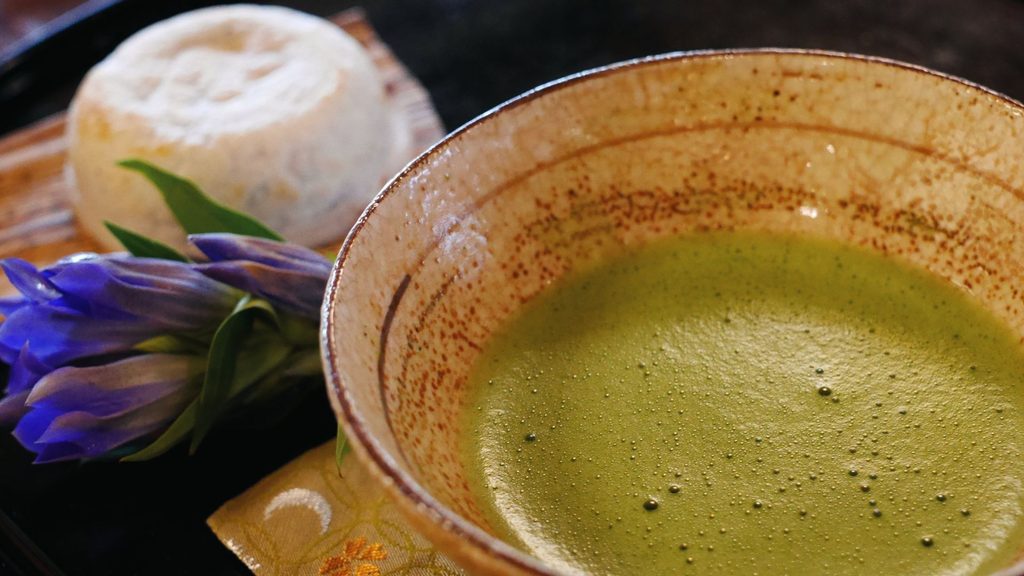
The concept is usually traced to the Japanese tea ceremony (sadō) and to practice codified around Sen no Rikyū (1522–1591).
What tea practice established
In a formal tea gathering the host prepares long before the guests arrive: choosing utensils suited to the season and to the specific guests, arranging the room, timing the charcoal, controlling the sequence. Almost all of this preparation is invisible during the gathering, which is the model omotenashi follows.
Ichigo ichie
The phrase ichigo ichie (一期一会), “one time, one meeting,” is closely associated with tea practice and with Ii Naosuke’s nineteenth-century writing on it.
The reasoning is that this particular gathering of these particular people will not recur, so it warrants full attention. That supplies the motivation: not that the guest is a customer, but that the occasion is unrepeatable.
The practices are old, but the packaging of omotenashi as a national characteristic is recent, dating largely from the 2000s onward.
How Omotenashi Differs from Western Hospitality
The differences are real but frequently overstated.
| Common Western service model | Omotenashi | |
|---|---|---|
| Trigger | Often responds to a request | Often anticipates before a request |
| Visibility | Attentiveness is shown | Effort is kept out of sight |
| Reward | Tipping is common | Tipping is not practised |
| Relationship | Provider and customer | Host and guest |
| Warmth | Often expressed conversationally | Often expressed through action |
The last row explains a common misreading. Visitors sometimes find Japanese service formal or impersonal, because warmth is delivered through what is done rather than through friendly conversation.
It would be wrong to conclude that Western hospitality is transactional and Japanese hospitality is not. Both are professional service industries containing genuine care and routine going-through-the-motions in similar proportions. The difference is in convention.
Omotenashi Examples You Will Actually Encounter in Japan
Concrete instances communicate the idea better than definitions.
Everyday examples
- The wet towel (oshibori) brought before you order — warm in winter, chilled in summer
- Umbrella stands or bags at entrances on rainy days
- Two-handed presentation of a card, a receipt, or your change
- Taxi doors opened and closed by the driver from inside
In a ryokan
A traditional inn is where the tea-ceremony inheritance is most visible: the room prepared before you see it, meals timed to your arrival, ingredients chosen for the season.
Omotenashi and Tipping: Why Japan Does Not Tip
This is the most practical consequence for visitors.
Tipping is not customary in Japan, and attempting it can cause awkwardness or be politely refused. Restaurants, taxis, hotels and hairdressers do not expect it.
The reasoning usually given
- Good service is treated as included rather than as an extra to purchase
- Accepting a personal payment can imply the standard service was insufficient
- Staff are paid a wage that does not assume tip income
The practical rule: do not tip. Saying thank you clearly, or writing to the establishment afterwards, is well received.
The ryokan exception, in current terms
Some traditional inns historically had a practice of giving a small wrapped sum (kokorozuke) to the attendant at the start of a stay. This has become much less common, many inns now decline it, and it is no longer expected at most establishments.
If you are unsure, the safe default is not to offer it. Where it is still practised, the money is placed in an envelope rather than handed over bare — handing over loose cash is the part most likely to cause discomfort.
Criticisms and Limits of Omotenashi
Omotenashi is discussed critically within Japan, and an honest guide should say so.
The labour question
The most substantial criticism is that a high standard of anticipatory, uncomplaining service places heavy demands on service workers in a sector where wages are not high. The term kasutamā harasumento — customer harassment — entered wide public use in Japan precisely because service expectations can be invoked abusively, and it is now the subject of workplace policy and legislation.
The branding question
Since 2013 omotenashi has functioned partly as a tourism slogan, and some Japanese commentators have objected that a working practice was flattened into a national self-image.
The uniqueness question
Claims that omotenashi is unique to Japan sit close to nihonjinron, the genre asserting Japanese cultural exceptionalism, which scholars treat cautiously. Anticipatory hospitality is not unique to Japan; what is distinctive is its degree of codification and its consistency across ordinary commercial settings.
The rigidity question
Highly standardised service can be inflexible outside the anticipated script. Visitors with dietary restrictions or accessibility needs sometimes find that a system built on anticipating typical needs handles atypical ones less well.
What Visitors Can Take from Omotenashi
Two things are worth carrying away: how to receive it, and what is portable.
Receiving it well
- Do not tip. Say thank you instead.
- Accept the gesture rather than waving it away; refusing can undo the intent.
- Match the register. A clear arigatō gozaimasu and a slight bow is sufficient.
- Treat the space with care. In a host-and-guest framing, the guest has a role too.
What travels
The transferable part is not the bowing or the oshibori. It is the habit of noticing what someone will need one step before they need it, and doing it without announcing that you have.
The reasoning behind it travels as well. Taking seriously that a given meeting will not recur in the same form makes ordinary attention easier to sustain, which is roughly what ichigo ichie is for.
Held alongside the criticisms above, that is a fair reading: a real practice worth learning from, and not a claim that one country invented consideration.

TAMURA-SHIPPO 田村七宝工芸
Founded in Meiji 16 (1883). We are a kiln located in Shippo-cho, Ama City, Aichi Prefecture, specializing in “Owari Shippo,” a traditional craft designated by the Ministry of Economy, Trade and Industry. We continue to produce Shippo ware in order to preserve this beautiful traditional culture. The content of this article has been fully supervised by Tamura Shippo Kogei (with AI-generated summaries included), and has been proofread with reference to reliable books and government media sources.