Japandi Style Explained: Where Japanese Wabi-Sabi Meets Scandinavian Design
Japandi is one of the most searched interior styles of the past decade, and also one of the most misunderstood. It is not simply “beige minimalism with a bonsai in the corner.”
It is a genuine meeting point between two design traditions that developed thousands of kilometres apart, yet arrived at strikingly similar conclusions about restraint, natural material, and useful beauty.
This guide explains what japandi actually draws from each culture, gives you a concrete palette and material list, and shows where handmade objects fit. We write as a Japanese enamel workshop that has supplied objects for interiors since 1883, so the craft advice is first-hand.
What Is Japandi? The Design Language Behind the Word
Japandi is a portmanteau of Japanese and Scandi (Scandinavian). It describes interiors that combine Japanese spatial restraint with Nordic warmth and functionality.
The pairing is not a marketing invention. Design historians often trace the connection to the mid-19th century, when Japanese art and objects flooded into Europe after Japan reopened to trade in 1854, sparking the movement known as Japonisme. Nordic designers absorbed those lessons early, and the influence never fully left.
The three ideas japandi rests on
- Fewer objects, better objects. Both traditions prefer one well-made item to five disposable ones.
- Natural material, honestly shown. Wood reads as wood; metal reads as metal. No fake finishes.
- Comfort without clutter. Scandinavian design refuses to be cold; Japanese design refuses to be crowded.
The single most useful test for whether a room is japandi: remove one object and see if the room improves. If it does, the room was not japandi yet.
Japandi is sometimes confused with plain minimalism. The difference matters. Minimalism can be austere and impersonal; japandi is warm, tactile, and built around daily use.
The Japanese Half of Japandi: Wabi-Sabi, Ma, and Shibui
Three Japanese concepts do most of the work in a japandi interior.
Wabi-sabi (侘寂)
Wabi-sabi finds beauty in imperfection, age, and impermanence. A ceramic bowl with a slightly uneven rim, a wooden table that has darkened over twenty years, a hand-hammered copper vessel that shows the tool marks. In japandi, this is what prevents the room from looking manufactured.
Ma (間)
Ma is negative space treated as an active design element, not as leftover emptiness. In Japanese rooms, the space between objects carries as much weight as the objects. This is why japandi rooms feel calm even when sparsely furnished — the emptiness is intentional, not accidental.
Shibui (渋い)
Shibui describes beauty that is quiet, understated, and reveals itself slowly. A shibui object does not announce itself across the room. In practice this means choosing a matte finish over a high-gloss one, and a muted colour over a saturated one — but keeping one small point of genuine depth so the eye has somewhere to rest.
In our own workshop this is a working principle rather than a theory. A cloisonné piece intended for a quiet room is glazed to a soft depth rather than a mirror shine, because the object should reward a second look rather than demand the first one.
The Scandinavian Half of Japandi: Hygge, Function, and Light
If Japan supplies the restraint, Scandinavia supplies the warmth. Without the Nordic half, japandi becomes a sparse tea room; without the Japanese half, it becomes a furniture catalogue.
Hygge
The Danish concept of hygge describes cosiness and contented ease. In a japandi room it shows up as soft textiles, candles or warm lamplight, and seating you actually want to sit in for three hours.
Functionalism
Nordic design carries a strong democratic ideal: well-designed objects should be affordable and usable by everyone. That is why japandi furniture is almost always low-profile, sturdy, and free of ornament that serves no purpose.
Light management
Scandinavian countries deal with long, dark winters, so their interiors are engineered to bounce and hold every available lumen. Pale walls, unlined or sheer window treatments, and multiple small light sources rather than one central ceiling fixture.
| Element | Japanese contribution | Scandinavian contribution |
|---|---|---|
| Colour | Earth tones, ink black, natural clay | Off-white, pale grey, soft beige |
| Wood | Darker: walnut, ash, cedar, bamboo | Lighter: oak, birch, pine |
| Line | Low, horizontal, floor-oriented | Clean, tapered, slightly rounded |
| Mood | Stillness, asymmetry, space | Warmth, comfort, practicality |
The most successful japandi rooms take colour and warmth from the Nordic column and structure and spacing from the Japanese one.
Japandi Colors and Materials: A Working Palette
You can build almost any japandi scheme from a narrow, disciplined palette.
The colour rule
Use three neutrals, one wood tone, and exactly one accent. That is the whole formula.
- Base neutrals: warm white, oatmeal, soft grey-taupe
- Deepening neutral: charcoal or sumi ink black, used sparingly for definition
- Wood tone: pick one and stay with it — mixing three woods is the fastest way to lose coherence
- Single accent: indigo, moss green, terracotta, or deep aubergine
Materials that carry the style
- Solid wood, oiled rather than lacquered
- Linen, raw cotton, undyed wool
- Paper: washi lampshades, shoji-style screens
- Stoneware and unglazed ceramic
- Rattan, bamboo, and woven grass
- Handworked metal — copper, brass, or vitreous enamel
Avoid anything high-gloss, anything chrome, and anything printed to imitate a material it is not. Japandi tolerates simplicity but it does not tolerate pretence — a laminate that pretends to be oak reads as false immediately in a room this quiet.
One deliberate point of colour saturation is not a violation of the style; it is what stops the room from going flat. A single indigo cushion or one enamelled vessel does more than ten beige accessories.
How to Build a Japandi Room, Step by Step
Work in this order and the result holds together.
- Empty the room completely. Japandi is a subtractive style, so start from zero rather than editing down.
- Fix the walls and floor first. Warm white or pale plaster walls, natural wood or tatami-toned flooring. These two surfaces are 70% of the impression.
- Place the one large piece. Usually a low sofa or a low bed. Keep the sightline above it open.
- Add storage that closes. Visible clutter destroys the style faster than bad furniture. Closed cabinetry in the same wood tone.
- Layer soft texture. Linen, wool, raw cotton — three textures minimum, all in your neutral range.
- Light in layers. A paper floor lamp, a table lamp, and one low-level light. No single overhead fixture doing all the work.
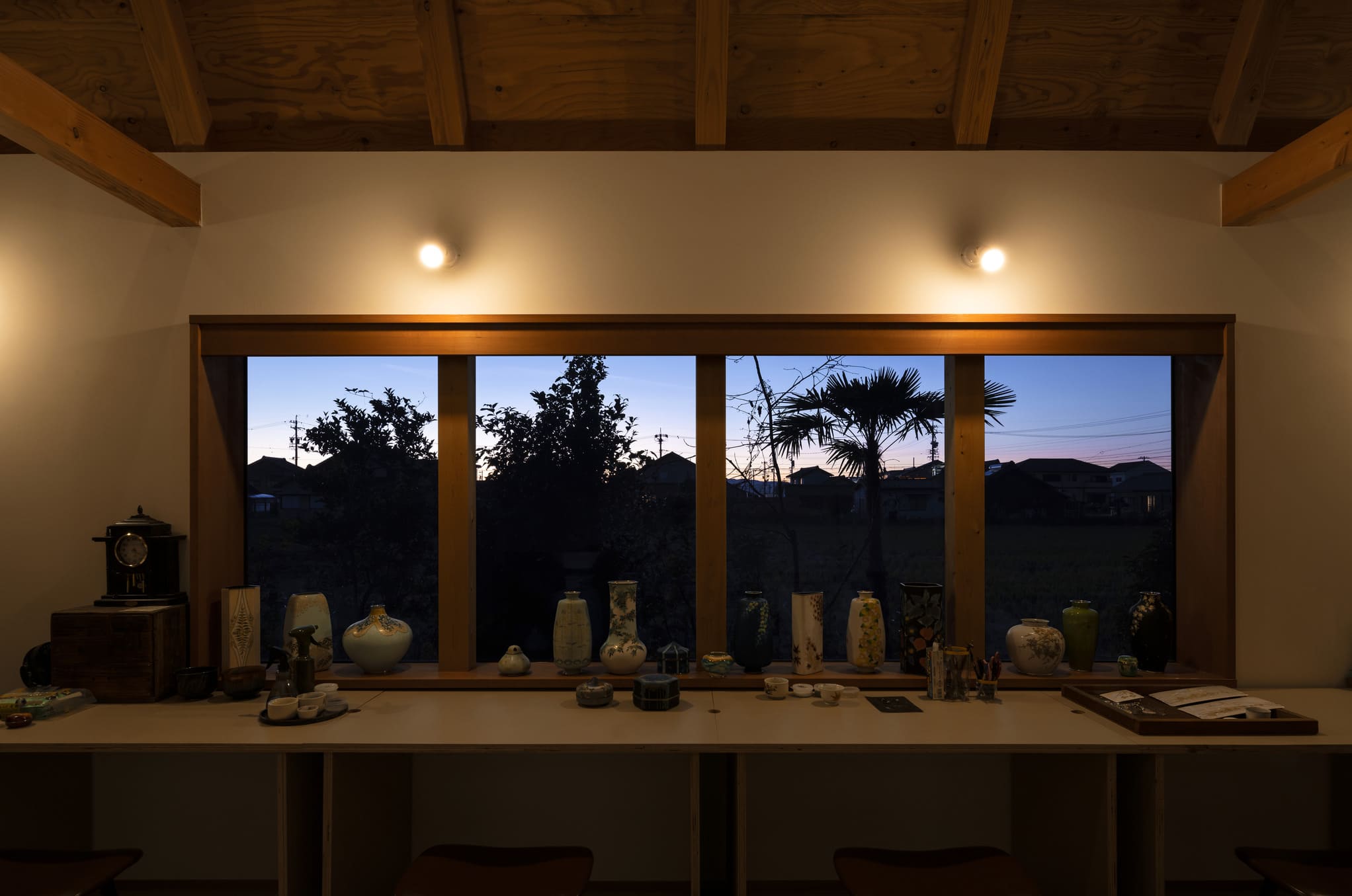
- Place one living thing and one made thing. A plant with an interesting silhouette, and one handmade object with genuine depth.
Stop at step seven. The discipline to stop is the actual skill in japandi.
A useful benchmark from Japanese interior practice: leave roughly one third of every horizontal surface completely empty. That empty third is not wasted space — it is the ma that makes everything else readable.
Five Japandi Mistakes That Make a Room Look Like a Showroom
These are the errors we see most often when people send us photographs of rooms they are furnishing.
- All beige, no contrast. Without one dark anchor, the room reads as washed-out rather than serene. Add charcoal or ink black in a small dose.
- Mass-produced “Japanese-style” decor. Printed fan motifs and factory-made kanji signs are the opposite of the aesthetic. Japandi values one authentic object over ten themed ones.
- Symmetry everywhere. Japanese composition favours asymmetry. Two identical lamps flanking a bed is a Western instinct, not a japandi one.
- Everything at the same height. Vary the vertical rhythm — low table, mid-height plant, one tall element.
- No texture. A room can be perfectly neutral and still feel cold if every surface is smooth. Roughness is what makes restraint feel human.
The underlying error in all five cases is treating japandi as a look to be copied rather than a set of decisions about how you want to live in the space.
A room assembled entirely from new purchases in a single afternoon will read as a showroom no matter how correct the palette. Japandi interiors gain their quality from accumulation over time, with objects that age visibly and well.
Where Handmade Craft Belongs in a Japandi Interior
Japandi needs at least one object that a machine could not have made. Without it, the restraint has nothing to be restrained about.
What to look for
- Visible evidence of the hand — tool marks, slight asymmetry, variation in glaze or grain
- Depth rather than brightness — a surface that changes as you move around it
- Material honesty — you can tell what it is made of by looking
- Small scale — one considered object, not a collection
Why enamel and ceramic work particularly well

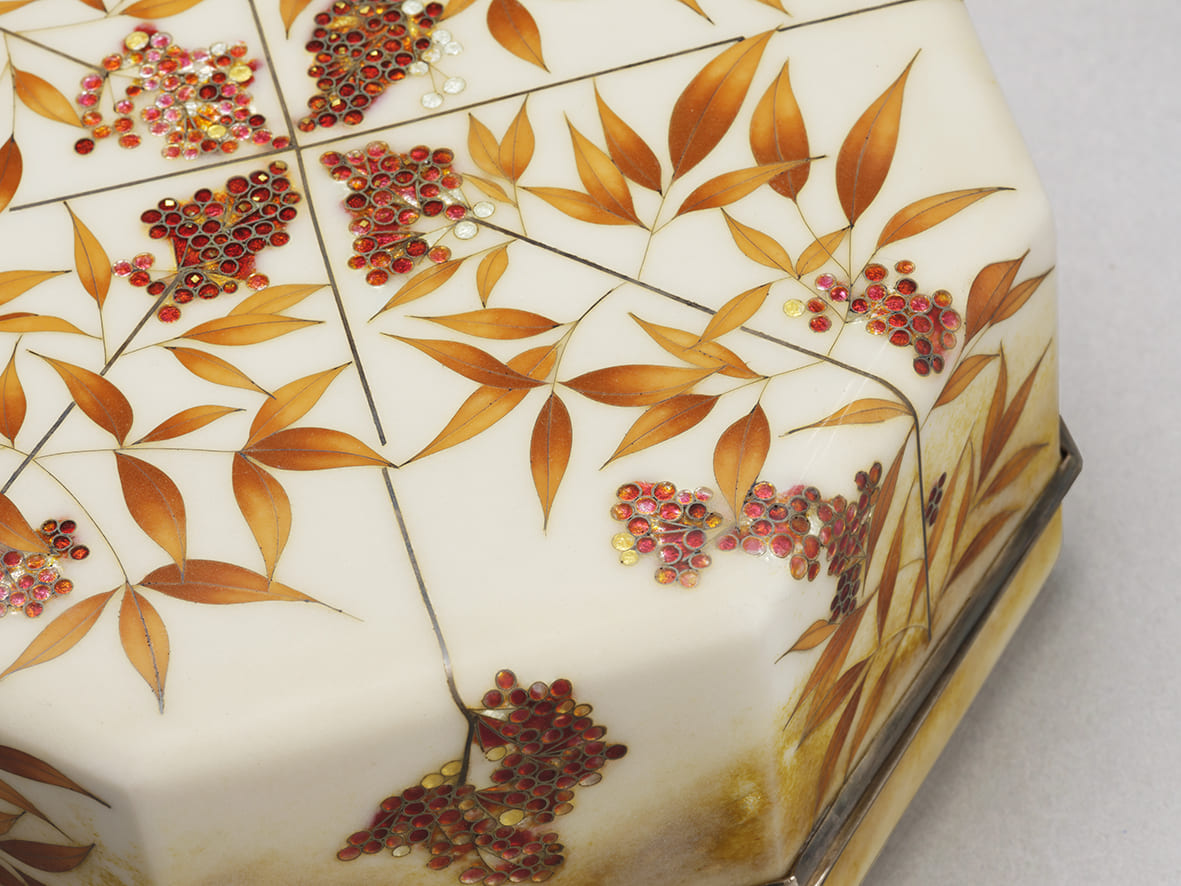
Japanese cloisonné, called shippo-yaki, is glass fused onto a copper or silver body at around 800°C, built up through repeated firings and finished by hand. Because the colour is glass rather than paint, it holds depth under low light in a way that printed or coated finishes cannot. That matters in japandi rooms, which are deliberately lit low and warm.
The same logic applies to wood-fired ceramics, hand-forged iron, and unbleached textiles. The point is not the country of origin but the presence of a decision made by a person — the mark of judgement is exactly what the quiet room is designed to let you notice.
Choose one such object, give it space, and let the rest of the room stay silent around it. That is japandi working as intended.