Japanese Traditional Patterns and Their Meanings: A Guide to Classic Wagara Designs
Japanese traditional patterns are not decoration in the Western sense. Almost every one of them carries a specific wish — for long life, for good fortune, for a marriage that lasts, for children who thrive.
That is why the same interlocking circles appear on a wedding kimono, a New Year’s envelope, and a hand-enamelled brooch. The pattern is doing a job.
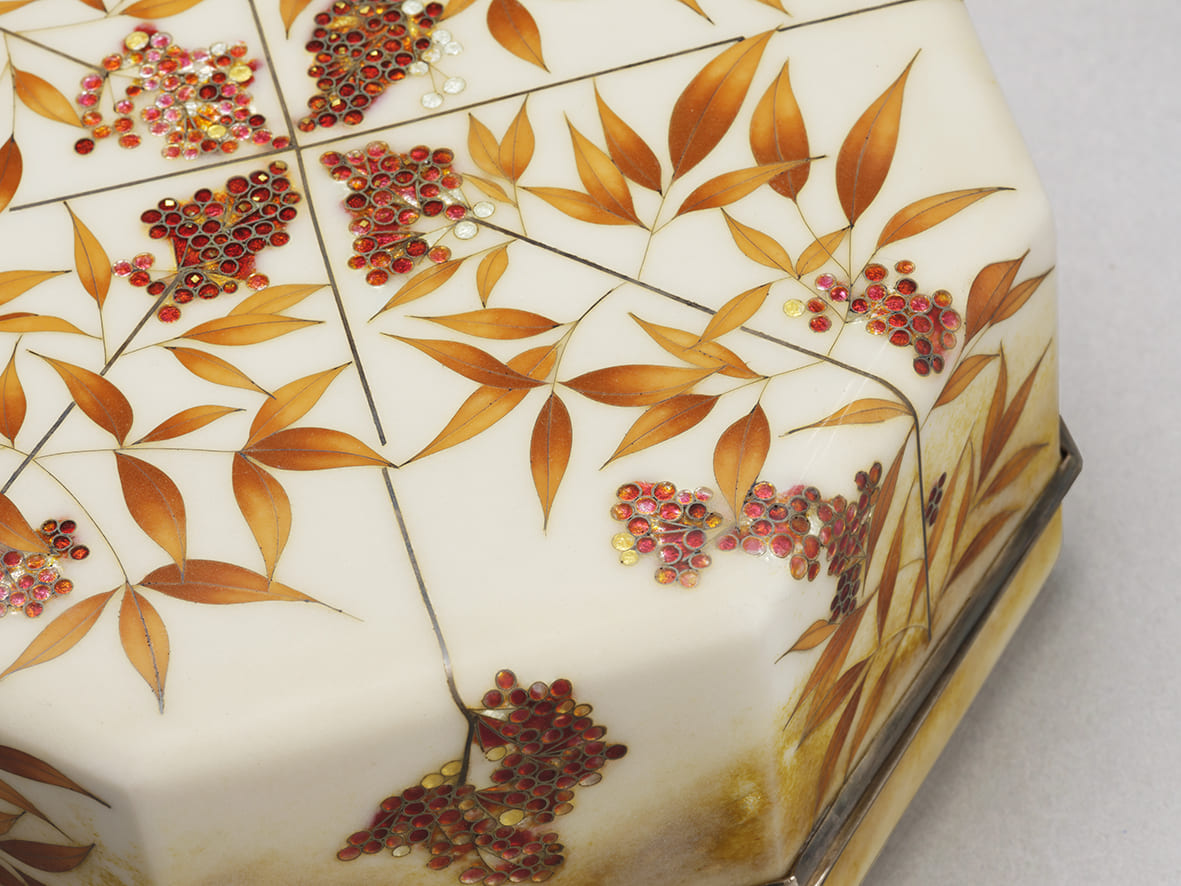
This guide explains what the classic wagara mean, how they are grouped, and how to choose the right one for the right occasion. We work with these motifs daily as an enamel workshop in Aichi, so the notes on how each pattern behaves on an object are drawn from the bench.
What Are Japanese Traditional Patterns (Wagara)?
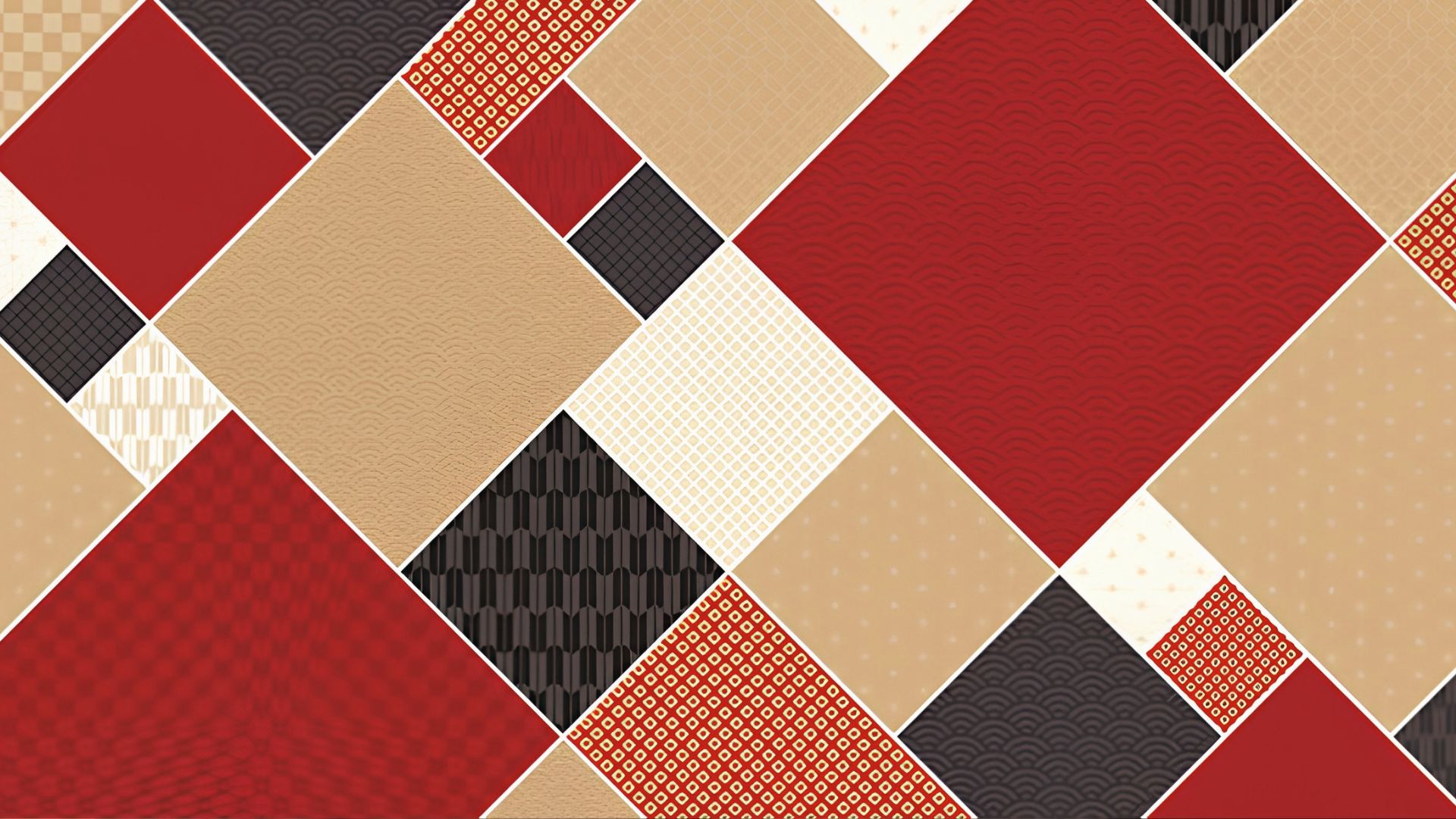
Japanese traditional patterns are known collectively as wagara (和柄), literally “Japanese designs.” They are geometric or stylised natural motifs that repeat across a surface, and they have been used on textiles, ceramics, lacquer, metalwork, and architecture for well over a thousand years.
Their defining feature is that meaning and form are inseparable. A pattern of overlapping circles is not chosen because it looks pleasant; it is chosen because overlapping circles suggest endless connection, and therefore good relationships.
Three things that distinguish wagara
- They are repeating and continuous. Most are designed to tile infinitely, which supports the idea of endless continuation.
- They are highly abstracted. A wave becomes a set of concentric arcs; hemp leaves become a hexagonal lattice.
- They carry an explicit wish. Longevity, fertility, protection from misfortune, prosperity.
This is why giving a Japanese gift with the wrong pattern is a real, if small, social error — you may be wishing something you did not intend.
Many wagara also come with a formal name that reads as a description rather than a poetic title. Seigaiha means “blue sea waves.” Asanoha means “hemp leaf.” Kikkō means “tortoise shell.” Once you know the naming convention, a large share of the vocabulary decodes itself.
How this guide is organised
Wagara are conventionally grouped by what the motif is drawn from: geometry, plants, or animals. Learning them by group rather than as a list is far more useful, because the meaning of an unfamiliar pattern can usually be guessed from its family. Plant motifs tend to concern growth; animal motifs tend to concern lifespan and character; geometric motifs tend to concern continuity.
Where Japanese Traditional Patterns Came From
The oldest layer of Japanese traditional patterns did not originate in Japan at all.
The Asuka and Nara periods (6th–8th century)
Patterns arrived along the Silk Road from Persia, India, and China, entering Japan with Buddhism and continental metalwork. The Shōsōin repository at Tōdai-ji in Nara, which holds roughly 9,000 objects dedicated in 756 after Emperor Shōmu’s death, preserves many of these earliest motifs on textiles, mirrors, and boxes.
The Heian period (794–1185)
Court culture domesticated the imported vocabulary. Patterns became softer, more seasonal, and more distinctly Japanese. This is the period in which motifs were formally assigned to seasons and to social rank.
The Edo period (1603–1868)
The decisive era for pattern as popular culture. Sumptuary laws restricted what commoners could wear, which pushed design energy into subtlety: understated colours, small repeating motifs, and clever visual puns.
Many patterns we now think of as timelessly Japanese were in fact Edo-period fashion, spread by kabuki actors the way celebrities spread fashion today. The ichimatsu checkerboard is named after the 18th-century actor Sanogawa Ichimatsu, who wore it on stage.
So the honest history of Japanese traditional patterns is one of continuous borrowing and reinvention, not of unchanged inheritance.
Japanese Traditional Patterns Built from Circles and Waves
Geometric wagara are the backbone of the tradition, and nearly all of them are about continuity — lines and shapes that never terminate.
| Pattern | Japanese name | Form | Meaning |
|---|---|---|---|
| Seven Treasures | Shippō (七宝) | Interlocking circles overlapping by a quarter | Harmony, endless connection, good relationships |
| Blue Sea Waves | Seigaiha (青海波) | Concentric arcs in fanned rows | Peaceful, unending good fortune |
| Tortoise Shell | Kikkō (亀甲) | Hexagonal lattice | Longevity — tortoises are said to live 10,000 years |
| Checkerboard | Ichimatsu (市松) | Alternating squares | Prosperity and continuity across generations |
Notice what all four share: none of them has a natural stopping point. That is the whole logic of the geometric group. A pattern that can tile forever is a wish that something will last forever.
Why the shippō pattern matters especially
The shippō pattern shares its name with shippō-yaki, Japanese cloisonné enamel. Both take their name from the seven treasures described in Buddhist scripture — gold, silver, lapis lazuli, crystal, giant clam shell, coral, and agate.
There is a second explanation for the pattern’s name specifically: the circles extend in four directions, and shihō (“four directions”) is thought to have shifted in pronunciation to shippō.
Because the circles never break, the pattern reads as connection without end — which is why it is one of the standard choices for wedding gifts and for objects marking a long partnership.
Japanese Traditional Patterns Drawn from Plants
Plant motifs make up the largest category, and the wish they carry is almost always about growth, endurance, or seasonal renewal.
Asanoha (麻の葉) — hemp leaf
A six-pointed geometric lattice abstracted from the hemp leaf. Hemp grows fast and straight without much care. For that reason asanoha was traditionally used on children’s clothing and baby garments, as a wish for healthy, rapid growth. It remains one of the most common patterns on infant kimono today.
Sakura (桜) — cherry blossom
Cherry blossoms bloom for roughly one week. The motif carries the idea of mono no aware — a gentle awareness that beauty is moving and temporary — alongside straightforward associations with spring, new starts, and prosperity. Because the tree flowers before the rice-planting season, sakura also historically signalled agricultural abundance.
Karakusa (唐草) — winding vine
A scrolling arabesque of endlessly winding vines. Symbolises family prosperity and long life, because the vine never stops extending. Modern Japanese people most often encounter it on green furoshiki wrapping cloths, an association so strong that it has become a visual shorthand in comedy.
Matsu, take, ume (松竹梅) — pine, bamboo, plum
The “three friends of winter.” Pine stays green, bamboo bends without breaking, plum flowers in the snow. Together they represent resilience under hardship, and the set is the standard motif for New Year and for celebratory occasions of all kinds.
The pattern to notice here is that plant motifs are the only group with strong seasonal rules attached — which matters a great deal on a kimono and very little on a year-round object.
Japanese Traditional Patterns Taken from Animals
Animal motifs are usually about lifespan, fidelity, or a quality of character borrowed from the creature.
- Tsuru (鶴) — crane. Said to live a thousand years, and mates for life. The standard motif for weddings and for milestone birthdays.
- Kame (亀) — tortoise. Said to live ten thousand years. Usually appears as the kikkō hexagon rather than as a literal animal.
- Chōchō (蝶) — butterfly. Transformation and the growth of a girl into womanhood; also used in pairs for marital happiness.
- Tombo (蜻蛉) — dragonfly. Known historically as katsumushi, the “victory insect,” because dragonflies only fly forward. A favourite on samurai armour and sword fittings.
- Kōmori (蝙蝠) — bat. Borrowed from China, where the word for bat is a homophone for good fortune.
Patterns that describe an action rather than a creature
Some motifs sit outside the three main families because they encode a gesture. Yagasuri (矢絣), the arrow-feather pattern, was traditionally given to a daughter marrying out of the household, because a shot arrow does not return — a wish that the marriage would not end in her coming home. It later became the standard pattern for Meiji-era schoolgirls and remains strongly associated with graduation dress.
The yagasuri example shows why meanings should be checked rather than assumed: a motif that once carried a rather severe message about marriage now reads simply as youthful and forward-looking. The same object can be read very differently depending on the era and the context it appears in.
How Japanese Traditional Patterns Are Used Today
Wagara are far from museum pieces. They appear across contemporary Japanese life.
Where you will actually see them
- Formal dress — kimono, obi, haori, and yukata, where pattern selection still follows seasonal rules
- Ceremonial paper — noshi envelopes, wrapping paper, New Year cards
- Tableware and lacquer — especially for celebratory meals
- Craft objects — cloisonné, damascene, textiles, woodwork
- Contemporary design — the seigaiha wave in particular has become a global graphic-design staple
How patterns behave on different materials
This is a practical point that guides are apt to skip. A pattern that works beautifully on fabric can fail completely on a hard surface, because textile patterns rely on drape and metal or ceramic surfaces do not.
In cloisonné we set each outline in a thin silver ribbon wire before the enamel is applied. Patterns with continuous curves — shippō circles, seigaiha arcs, karakusa vines — suit this technique very well, because the wire can follow the line without interruption. Patterns with many sharp corners require the wire to be bent at acute angles and are considerably harder to execute cleanly.
If you are commissioning or buying a patterned craft object, look closely at the line quality at the tightest curve. That is where the maker’s skill is visible.
Choosing Japanese Traditional Patterns for Gifts and Ceremonies
Match the pattern to the occasion and the gift does additional work for you.
| Occasion | Suitable patterns | Reason |
|---|---|---|
| Wedding | Shippō, crane, paired butterflies, matsu-take-ume | Endless connection, lifelong partnership |
| New baby | Asanoha | Strong, fast, healthy growth |
| Milestone birthday | Crane, kikkō tortoise shell | Longevity |
| Graduation or new job | Yagasuri, dragonfly | Moving forward, not turning back |
| New Year | Matsu-take-ume, seigaiha | Resilience and continuing good fortune |
| Retirement or long service | Shippō, crane | Recognition of a long, unbroken relationship |
Two cautions
First, seasonality still applies in formal contexts. Cherry blossom in November reads as careless on a kimono, though it is unproblematic on a year-round object such as jewellery or a decorative plate.
Second, avoid patterns with funerary associations for celebratory gifts — lotus imagery in particular is closely tied to Buddhist memorial contexts in Japan, even though it is read very differently elsewhere.
For international gift-giving, the safest and most versatile choices are shippō, seigaiha, and the crane. All three are unambiguously auspicious, work in any season, and are recognisable enough that the recipient can look up the meaning themselves.