Japanese Cloisonné Enamel Jewelry: How It Is Made, What to Look For, and How to Care for It
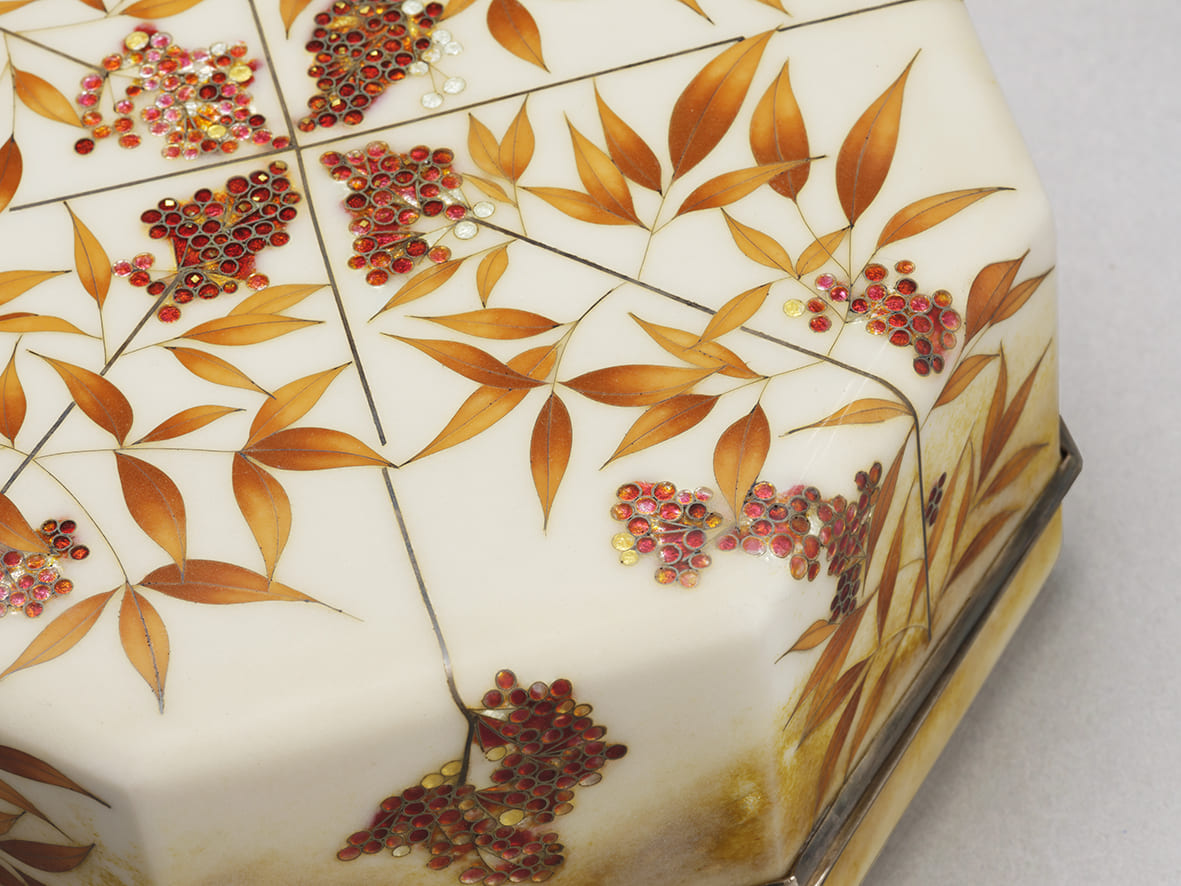
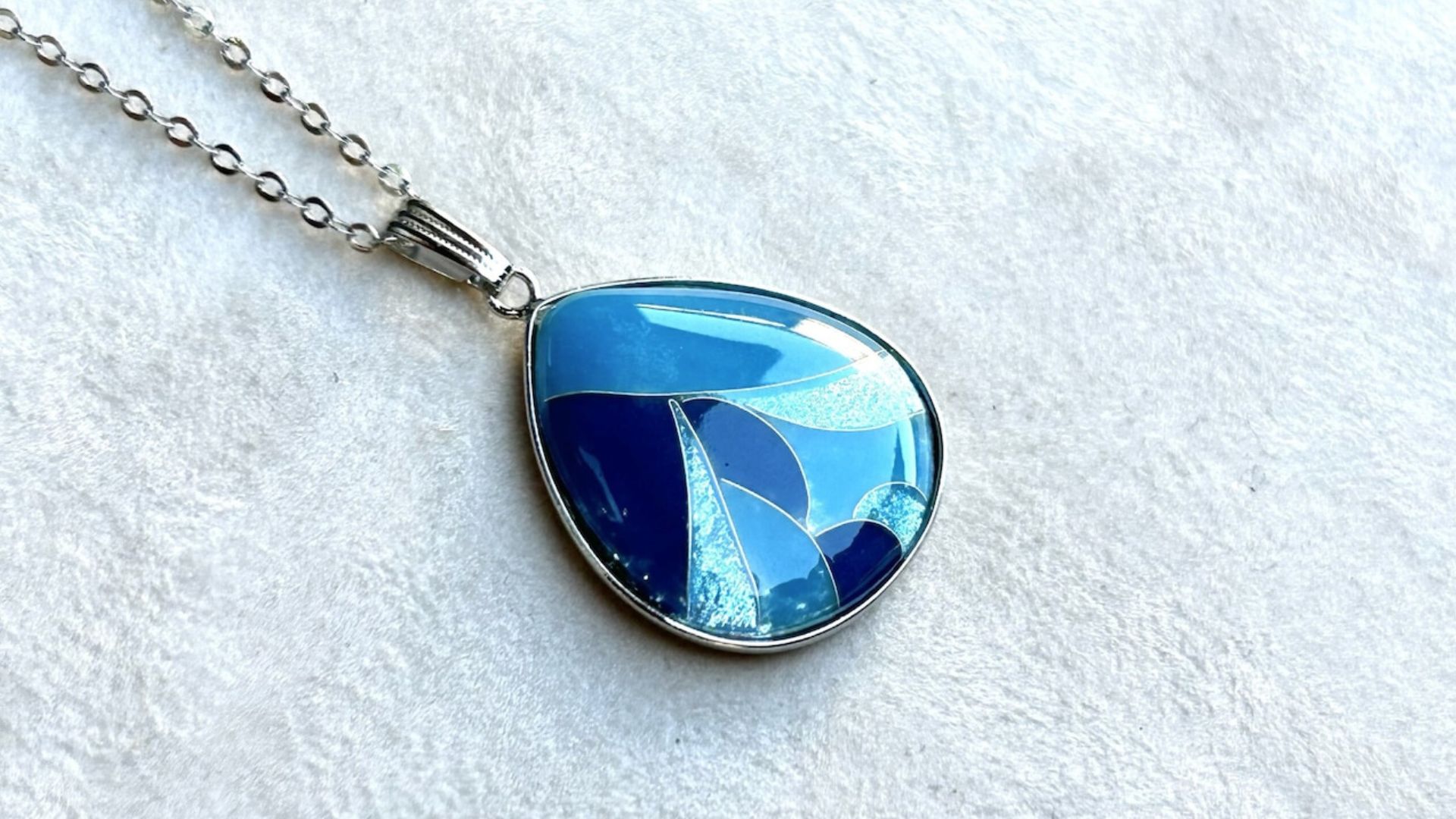
Cloisonné jewelry looks like painted metal until you get close. It is not painted — the colour is glass, fused onto silver or copper at around 800°C.
That single fact determines almost everything else: why the colour will not fade, why the piece needs care against impact, and why the price sits where it does.
This guide covers how Japanese cloisonné jewelry is made, what separates good work from ordinary work, and how to look after it. We make it, so the assessment points are the ones we use ourselves.
What Is Japanese Cloisonné Enamel Jewelry?
Cloisonné jewelry is metal jewellery decorated with vitreous enamel — powdered glass fused to the metal by firing — with the design outlined in fine metal wire set upright on the surface.
In Japan the craft is called shippō-yaki (七宝焼), and the wired technique is yūsen shippō. The French-derived word cloisonné comes from cloison, meaning partition, and describes the same structure: compartments formed by wire, then filled.
What this means in practice
- The colour is glass, not pigment. It cannot rub off, and it does not fade with light exposure the way a coating can.
- The wire stays visible. Fine metal lines separate every colour field in wired work.
- The surface is hard but brittle. Glass on metal resists scratching well and resists impact poorly.
This is the trade-off at the centre of enamel jewellery: exceptional colour permanence, in exchange for a material that chips if struck against something hard.
How Japanese Cloisonné Enamel Jewelry Is Made
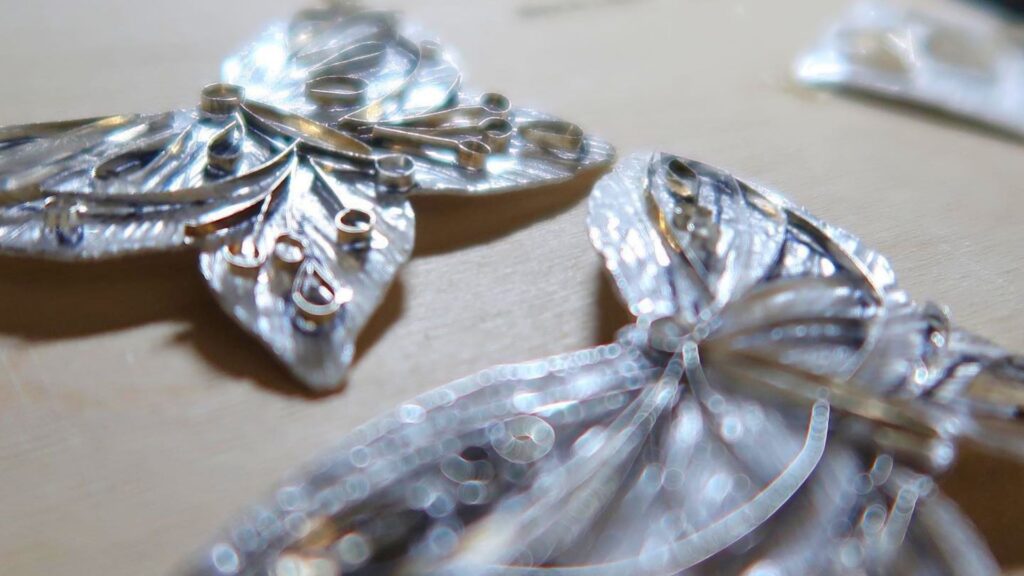
The process is the same as for larger pieces, carried out at a much smaller scale.
- Forming the base. A silver or copper blank is cut and shaped for a pendant, ring, brooch or earring.
- Drawing the design directly onto the metal.
- Wire setting. Flat silver ribbon wire is bent by hand and glued upright along every outline.
- Fixing the wires with a firing.
- Applying glaze. Powdered glass mixed to a paste is placed into each compartment with a fine spatula.
- Firing at around 800°C, after which the glaze sinks as it cools.
- Building up. Glazing and firing are repeated until the surface stands level with the wires. The number of cycles depends on the piece.
- Polishing the surface flat by hand and mounting the findings.
Why small scale is harder, not easier
Every stage that is difficult on a vase is more difficult on a pendant, because the tolerances shrink while the hand does not.
A wire that is fractionally off on a 30-centimetre vase is invisible. The same error on a 20-millimetre pendant is the first thing you see. Small enamel work is where a maker’s control of the wire is most exposed.
Types of Japanese Cloisonné Enamel Jewelry
| Type | Japanese | Appearance |
|---|---|---|
| Wired | Yūsen shippō | Fine metal lines outline every colour field |
| Wireless | Musen shippō | Colours blend; no visible outlines in the finished piece |
| Foil-backed | Ginbari | Transparent glaze over textured silver foil, producing a strong internal shimmer |
| Base removed | Shōtai shippō | Translucent; light passes through. Very fragile |
| Opaque | Doro shippō | Matte, non-transparent colour |
Ginbari is worth knowing about specifically, because it explains the depth some enamel jewellery has: light passes through the transparent glaze, reflects off the textured foil beneath, and returns through the glaze again.
The equivalent European terms are cloisonné for wired work, plique-à-jour for the base-removed technique, and basse-taille for transparent glaze over a worked metal surface.
What to Look For When Buying Japanese Cloisonné Enamel Jewelry
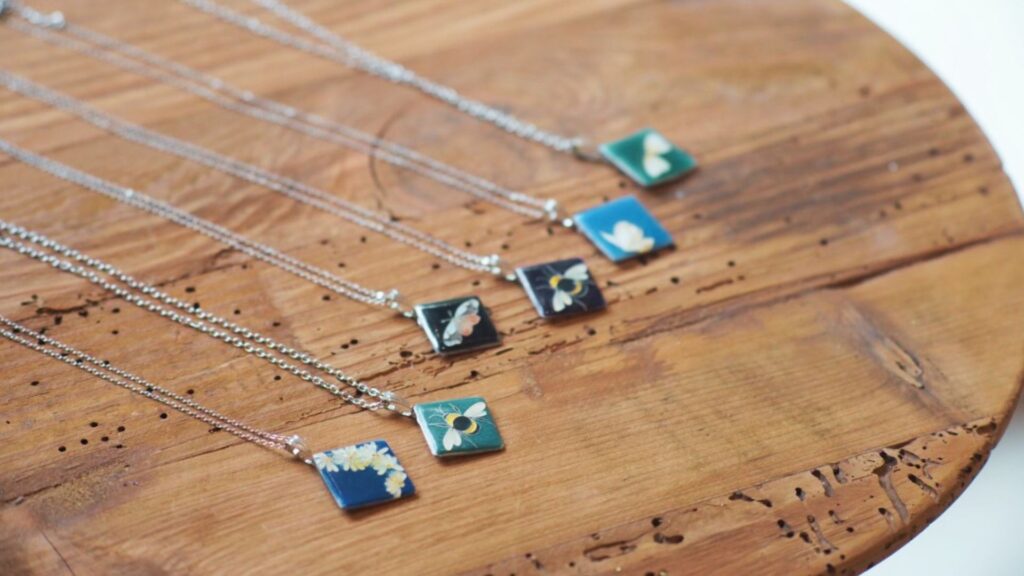
Five checks, in the order we would apply them.
1. The wire at the tightest curve
Find the smallest, sharpest curve in the design and look at it under magnification. That is where hurried wire setting shows. The line should be even in width and sit cleanly against the glaze on both sides.
2. The surface across a low angle
Hold the piece so light rakes across it. The glaze should sit level with the wires. Dips between wires mean the build-up was stopped early.
3. Colour behaviour under movement
Transparent glaze over metal changes as the angle shifts. Colour that stays completely flat from every angle is usually opaque glaze, which is a legitimate choice but a different one — worth knowing which you are buying.
4. The back and the findings
Look at what you are not meant to look at. The reverse, the bail, the earring post and the clasp indicate whether the same standard was applied throughout. Findings should be securely set, not glued on approximately.
5. Chips and hairlines
Examine the rim and any raised edge under strong light. Enamel chips at edges before anywhere else, and a hairline crack in the glass layer will not stop spreading.
How Japanese Cloisonné Enamel Jewelry Compares with Other Materials
| Cloisonné enamel | Gemstone | Painted or coated metal | |
|---|---|---|---|
| Source of colour | Glass fused to metal | The stone itself | Applied surface layer |
| Fading | Does not fade with light | Some stones fade | Can fade and wear away |
| Scratching | Resistant | Varies by hardness | Scratches easily |
| Impact | Chips | Varies; some stones cleave | Dents rather than chips |
| Design freedom | Any shape or colour combination | Limited by the stone | High |
The distinctive position enamel occupies is that it gives colour freedom close to painting with permanence close to stone. No other decorative approach on metal offers both at once.
What it does not offer is the refractive brilliance of a faceted gem, or the toughness of solid metal. An enamel piece is a considered object rather than an everyday knockabout one.
Caring for Japanese Cloisonné Enamel Jewelry
Everyday care
- Wipe with a soft dry cloth after wearing
- Remove before physical activity, washing up, or anything involving hard surfaces
- Store separately, not loose in a box with other jewellery — impact against metal is the main risk
- Put jewellery on last, after perfume, hairspray and cosmetics
What to avoid
- Ultrasonic cleaners. Vibration can propagate an existing hairline crack.
- Abrasive polishes and cloths. These dull the polished glass surface.
- Chemical silver dips. Keep them away from the enamel; clean exposed silver carefully by hand instead.
- Sudden temperature change. Glass and metal expand at different rates.
On repair
A chipped enamel field usually cannot be invisibly repaired. Refiring risks the rest of the piece, and filling with resin is a different material that will age differently. Prevention is the realistic strategy.
Buying Japanese Cloisonné Enamel Jewelry as a Gift
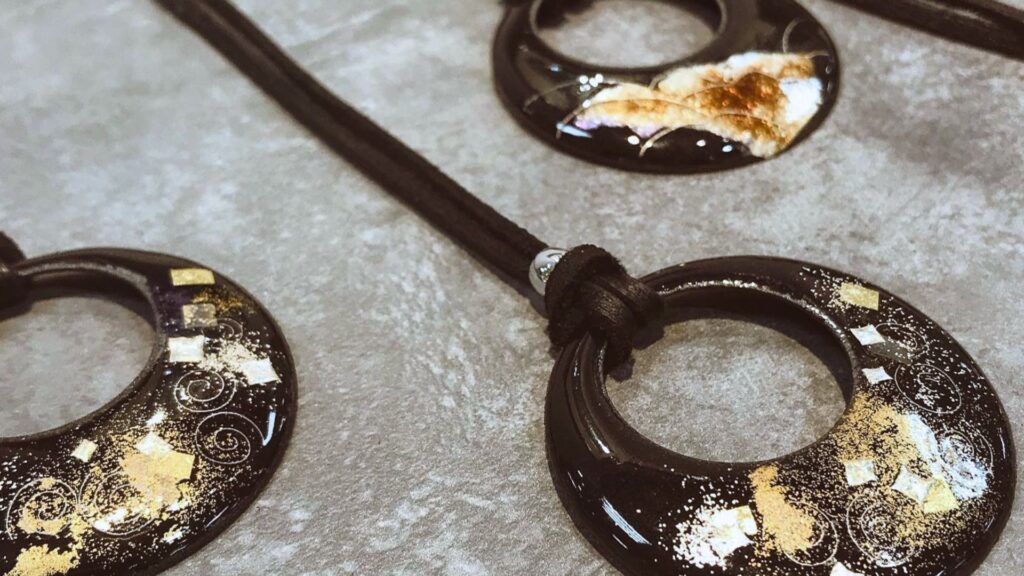
Why it works as a gift
- It does not require sizing in pendant or brooch form
- The colour will look the same in twenty years, which suits a commemorative gift
- Motifs carry meaning — crane for longevity and partnership, cherry blossom for new beginnings, shippō circles for connection without end
- It is compact, which matters if it is travelling home in a suitcase
Matching motif to occasion
| Occasion | Motifs commonly chosen |
|---|---|
| Wedding or anniversary | Crane, paired butterflies, shippō pattern |
| Graduation or a new start | Cherry blossom |
| Milestone birthday | Crane, tortoise-shell hexagon |
| Retirement or long service | Crane, shippō pattern |
A practical note on presentation
If the recipient is unfamiliar with the material, it is worth telling them the colour is glass rather than paint, and that the piece should not be worn for sport or housework. Most damage to enamel jewellery happens in the first months, before the owner has adjusted their handling.

TAMURA-SHIPPO 田村七宝工芸
Founded in Meiji 16 (1883). We are a kiln located in Shippo-cho, Ama City, Aichi Prefecture, specializing in “Owari Shippo,” a traditional craft designated by the Ministry of Economy, Trade and Industry. We continue to produce Shippo ware in order to preserve this beautiful traditional culture. The content of this article has been fully supervised by Tamura Shippo Kogei (with AI-generated summaries included), and has been proofread with reference to reliable books and government media sources.