Japandi Style Explained: Where Japanese Restraint Meets Scandinavian Warmth
Japandi is one of the most searched interior styles of the past decade, and one of the most loosely defined. It is often reduced to beige minimalism with a plant in the corner.
It is better understood as a meeting point between two design traditions that developed separately but arrived at similar conclusions about restraint, natural material and useful beauty.
This guide explains what japandi draws from each side, gives a concrete palette and material list, and looks at where handmade objects fit. We write as a Japanese craft workshop, so the section on craft reflects working practice.
What Is Japandi? The Design Language Behind the Word
Japandi combines Japanese and Scandi (Scandinavian). It describes interiors that pair Japanese spatial restraint with Nordic warmth and functionality.
The pairing has some historical basis. Japanese art and objects reached Europe in quantity from the mid-19th century, after Japan reopened to foreign trade, and the resulting movement known as Japonisme influenced European design broadly, Nordic design included.
The three ideas japandi rests on
- Fewer objects, better objects. Both traditions favour one well-made item over several disposable ones.
- Natural material, honestly shown. Wood reads as wood; metal reads as metal.
- Comfort without clutter. Scandinavian design resists coldness; Japanese design resists crowding.
A practical test: remove one object and see whether the room improves. If it does, there is still editing to do.
Japandi is sometimes conflated with minimalism. The difference is that minimalism can be austere and impersonal, while japandi is warm, tactile and organised around daily use.
The Japanese Half of Japandi: Wabi-Sabi, Ma, and Shibui
Three Japanese concepts do most of the work.
Wabi-sabi (侘寂)
Wabi-sabi finds beauty in imperfection, age and impermanence. A bowl with a slightly uneven rim, a table darkened over twenty years, a hammered copper vessel showing tool marks. In japandi this is what keeps a room from looking manufactured.
Ma (間)
Ma treats negative space as an active element rather than as leftover emptiness. The space between objects carries weight of its own. This is why sparsely furnished japandi rooms read as calm rather than unfinished — the emptiness is a decision.
Shibui (渋い)
Shibui describes beauty that is understated and reveals itself slowly. In practice it means favouring a matte finish over a high-gloss one and a muted colour over a saturated one, while keeping one point of genuine depth for the eye to settle on.
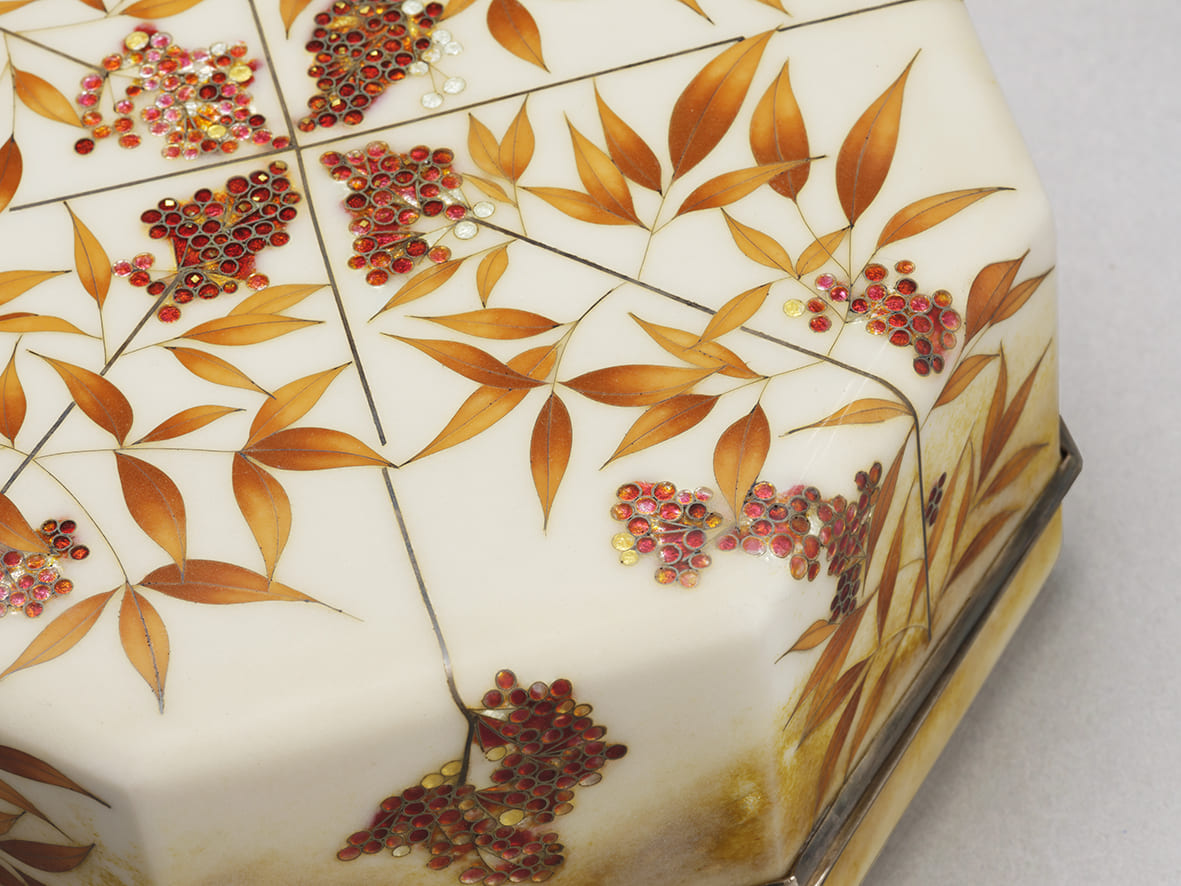
In our workshop this is a working decision rather than a theory. A cloisonné piece intended for a quiet room is finished to a softer surface rather than a mirror shine, so that it rewards a second look instead of demanding the first one.
The Scandinavian Half of Japandi: Hygge, Function, and Light
Japan supplies restraint; Scandinavia supplies warmth. Without the Nordic half, japandi turns sparse; without the Japanese half, it turns into a furniture catalogue.
Hygge
The Danish concept of hygge describes cosiness and contented ease. In a japandi room it appears as soft textiles, warm lamplight, and seating that is comfortable for hours rather than minutes.
Functionalism
Nordic design carries a strong democratic strand: well-designed objects should be usable and affordable. This is why japandi furniture tends to be low, sturdy and free of ornament that serves no purpose.
Light management
Scandinavian countries have long dark winters, and their interiors are built to make the most of available light: pale walls, minimal window treatments, and several small light sources rather than one central fixture.
| Element | Japanese contribution | Scandinavian contribution |
|---|---|---|
| Colour | Earth tones, ink black, natural clay | Off-white, pale grey, soft beige |
| Wood | Darker: walnut, ash, cedar, bamboo | Lighter: oak, birch, pine |
| Line | Low, horizontal, floor-oriented | Clean, tapered, slightly rounded |
| Mood | Stillness, asymmetry, space | Warmth, comfort, practicality |
Most successful japandi rooms take colour and warmth from the Nordic column and structure and spacing from the Japanese one.
Japandi Colors and Materials: A Working Palette
A narrow palette carries the style.
A simple colour framework
Three neutrals, one wood tone, one accent.
- Base neutrals: warm white, oatmeal, soft grey-taupe
- Deepening neutral: charcoal or ink black, used sparingly for definition
- Wood tone: choose one and stay with it; mixing several is the quickest way to lose coherence
- Single accent: indigo, moss green, terracotta or deep aubergine
Materials that carry the style
- Solid wood, oiled rather than lacquered
- Linen, raw cotton, undyed wool
- Paper: washi lampshades, shoji-style screens
- Stoneware and unglazed ceramic
- Rattan, bamboo, woven grass
- Handworked metal — copper, brass, or vitreous enamel
Avoid high-gloss surfaces, chrome, and materials printed to imitate something they are not. In a room this quiet, a laminate imitating oak is conspicuous.
One point of saturated colour is not a violation of the style; it is what keeps the scheme from going flat. A single indigo cushion or one enamelled vessel does more than a shelf of neutral accessories.
How to Build a Japandi Room, Step by Step
Working in this order keeps the result coherent.
- Empty the room. Japandi is subtractive, so starting from zero is easier than editing down.
- Settle walls and floor first. Warm white or pale plaster walls, natural wood or tatami-toned flooring. These are the largest surfaces and set the tone for everything else.
- Place the one large piece. Usually a low sofa or bed. Keep the sightline above it open.
- Add storage that closes. Visible clutter undermines the style faster than poor furniture does.
- Layer soft texture. Linen, wool and raw cotton, all within the neutral range.
- Light in layers. A paper floor lamp, a table lamp, and one low-level light rather than a single overhead fixture.
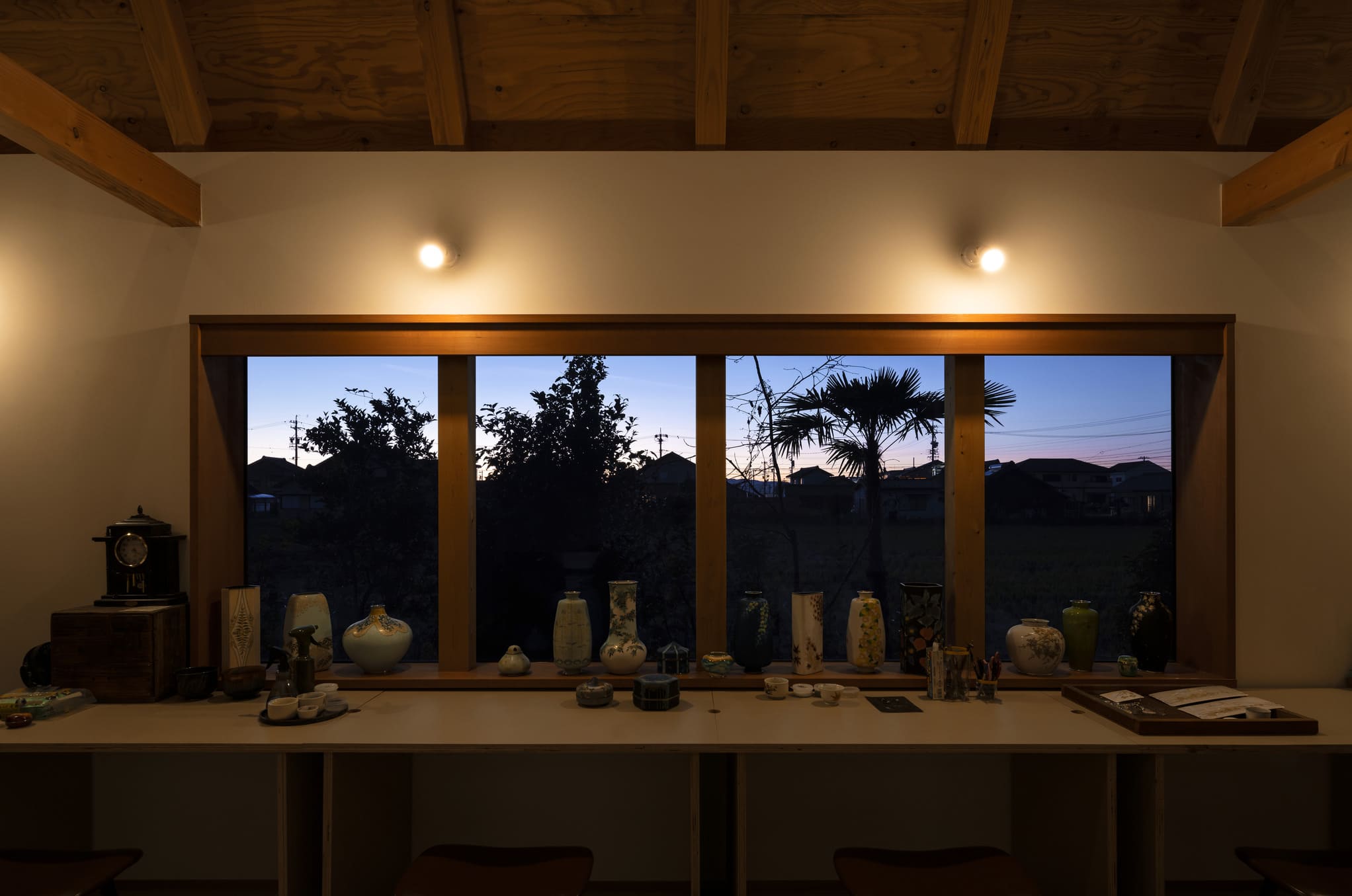
- Add one living thing and one made thing. A plant with a good silhouette, and one handmade object with depth.
Then stop. Knowing when to stop is the difficult part of this style.
Leaving a meaningful proportion of each horizontal surface clear is worth doing deliberately rather than by default. Empty surface is what makes the objects on it readable.
Five Japandi Mistakes That Make a Room Look Like a Showroom
Common failure modes.
- All beige, no contrast. Without a dark anchor, the room reads washed out. A small amount of charcoal or ink black fixes it.
- Mass-produced “Japanese-style” decor. Printed fan motifs and factory-made kanji signs work against the aesthetic, which favours one authentic object over several themed ones.
- Symmetry everywhere. Japanese composition tends to favour asymmetry; two matching lamps flanking a bed is a different instinct.
- Everything at one height. Vary the vertical rhythm — low table, mid-height plant, one tall element.
- No texture. A perfectly neutral room can still feel cold if every surface is smooth.
The shared error is treating japandi as a look to be copied rather than as a set of decisions about how the space will be used.
A room assembled entirely from new purchases in one afternoon tends to read as a showroom regardless of palette. The style depends on accumulation and on objects that age visibly.
Where Handmade Craft Belongs in a Japandi Interior

Japandi benefits from at least one object a machine could not have made. Without it, the restraint has nothing to be restrained around.
What to look for
- Evidence of the hand — tool marks, slight asymmetry, variation in glaze or grain
- Depth rather than brightness — a surface that changes as you move around it
- Material honesty — you can tell what it is by looking
- Restraint in quantity — one considered object, not a collection
Why enamel and ceramic suit the style
Japanese cloisonné, shippō-yaki, is glass fused onto a copper or silver body at around 800°C, built up through repeated firings and finished by hand. Because the colour is glass rather than pigment, it holds depth under low light in a way a printed or coated finish does not. That matters in rooms lit deliberately low and warm.
The same reasoning applies to wood-fired ceramics, hand-forged iron and unbleached textiles. What counts is not the country of origin but the presence of decisions made by a person, which is what a quiet room is arranged to let you notice.
Choose one such object, give it room, and let the rest stay silent around it.

TAMURA-SHIPPO 田村七宝工芸
Founded in Meiji 16 (1883). We are a kiln located in Shippo-cho, Ama City, Aichi Prefecture, specializing in “Owari Shippo,” a traditional craft designated by the Ministry of Economy, Trade and Industry. We continue to produce Shippo ware in order to preserve this beautiful traditional culture. The content of this article has been fully supervised by Tamura Shippo Kogei (with AI-generated summaries included), and has been proofread with reference to reliable books and government media sources.